
An alpine forest 45 minutes from the Strip
Mount Charleston — officially Charleston Peak, the 11,916-foot high point of the Spring Mountains National Recreation Area — is the surprise of the Las Vegas map. Drive 35 miles northwest on US-95 and turn up NV-157 (Kyle Canyon Road) and within 20 minutes the creosote gives way to piñon and juniper, then ponderosa pine, then aspen and bristlecone at the top. The temperature drops roughly 3.5°F for every thousand feet you climb, which is why the trailheads at 7,500 to 8,500 feet run 20 to 30 degrees cooler than the Strip: a 108°F July afternoon in town is a pleasant 80°F in the shade of Kyle Canyon.
Two paved canyons lead in. Kyle Canyon (NV-157) is the busier one, with the visitor gateway, the lodge, the picnic areas and the most popular trails. Lee Canyon (NV-156) is quieter and ends at the ski area. NV-158 (Deer Creek Road) links them across the mountain at 8,400 feet, so a loop — up one canyon, across, down the other — is the natural way to see it all in a day. Whole loop from the Strip and back is under 100 miles.
Winter: snow play, sledding and Lee Canyon skiing
For visitors who have never seen snow, or who cannot believe it exists an hour from a pool party, winter Mount Charleston is a delight. From roughly December to March the upper canyons are usually white, and the Forest Service designates snow-play areas — the Foxtail area on Lee Canyon Road and spots near the Kyle Canyon end — where families sled on plastic saucers bought at a Las Vegas big-box store on the way. Parking fills by mid-morning on weekends after a storm, and the roads can require chains or four-wheel drive when it has just snowed; check NDOT road conditions before leaving town.
Lee Canyon, at the top of NV-156, is a small ski and snowboard area with a handful of lifts, a beginner hill, rentals and a tubing hill on selected days. It is a local mountain, not a destination resort: a few hundred acres, a season that typically runs from around December to March or April depending on snowfall, and lift tickets that as of 2026 sit roughly in the $50–$120 range depending on the day, with rentals and lessons extra — check the Lee Canyon site for the current season, hours and pricing before you go, because the operation shifts year to year with the snowpack. For a Strip visitor with a free winter day it is a genuinely fun novelty; do not expect Utah.
Summer: the hikes that beat the heat
From May to October the mountain is Las Vegas's cool room, and the trails are the reason to go. The best day-trip options, all from paved trailheads:
- Mary Jane Falls — 3 miles round trip, about 1,000 feet of climb, to a seasonal waterfall and caves at the head of Kyle Canyon. The most popular walk on the mountain; start by 8 a.m. for parking.
- Cathedral Rock — 3 miles round trip, a steady climb to a limestone knob with the best view in Kyle Canyon.
- Fletcher Canyon — 3.5 miles round trip and gentle, ending in a narrow slot; good for families.
- Bristlecone Trail — a 6-mile loop from the top of Lee Canyon through ancient bristlecone pines; mostly shaded and mostly level.
- Charleston Peak (South Loop or North Loop) — 16 to 20 miles and 4,000 feet of climb; a serious full day for fit, acclimatised hikers only, snow-free roughly June to October.
Trail conditions and closures change after storms and fires; the Spring Mountains visitor gateway on Kyle Canyon Road posts current status and has the maps.
What else is up there
The mountain is thin on facilities, which is part of the charm. The Resort on Mount Charleston (the lodge near the mouth of Kyle Canyon) has a restaurant and rooms, and the Mount Charleston Lodge site at the top of Kyle Canyon has historically had a restaurant and cabins — the original lodge burned in 2021 and rebuilding has been under way, so check what is open before you plan lunch around it. Picnic areas at Kyle Canyon (Cathedral Rock, Old Mill) and Lee Canyon (Foxtail) have tables, restrooms and shade, some by reservation in summer.
The Spring Mountains Visitor Gateway, just off NV-157, is worth 20 minutes for the exhibits on the Palmer's chipmunk and other species found nowhere else on earth, the Seven Stones Plaza that tells the mountain's story from the perspective of the Nuwuvi (Southern Paiute) people who hold it sacred, and the rangers who know which trails are clear. Wild burros and mule deer are common along the roads at dawn and dusk; drive slowly, especially on NV-158.
Tour versus self-drive
This is a rental-car trip. The roads are excellent two-lane state highways, the loop is short and the pleasure is in stopping where you like. Fuel up before US-95; there is none on the mountain. Guided options exist — a few small-group operators run Mount Charleston and Red Rock combination days from the Strip, and in winter some offer snow-play or snowshoe trips, generally priced roughly $100–$200 per person as of 2026, check operators for current offerings — and they make sense for visitors without a car or who are nervous about snow driving. Public transport does not reach the mountain.
If you rent, ask for a car with all-season tyres in winter and carry chains if snow is forecast; NDOT can require them on NV-156 and NV-157 after a storm, and rental agencies do not supply them. Our car rental guide covers the rest. In summer any car is fine, though the climb up Kyle Canyon will test an overloaded economy engine.
Costs, time needed and best season
Mount Charleston is one of the cheapest days out from Las Vegas. There is no entrance fee to the recreation area; the only charges are for some developed picnic sites (roughly $10–$20 per site) and, in winter, for skiing and tubing at Lee Canyon. Add fuel for a 100-mile loop and a lodge lunch (roughly $15–$30 a head) and the day runs well under $100 for a car of four. A snow-play saucer is $10–$20 in town.
Time needed: four to six hours door to door covers the loop drive, one of the shorter hikes and a picnic; a Charleston Peak summit day is 10 to 12 hours; a ski day is a full day. Best season depends on what you want: December to March for snow, June to September to escape the heat, and October for the aspens turning gold on Deer Creek Road, which locals rate as the best two weeks on the mountain. Spring is unpredictable — late snow on the trails into May some years.
What to pack (it is a different climate up there)
The most common mistake is dressing for the Strip. Pack a warm layer year-round; even in July the summit ridges are windy and evening temperatures in the canyons drop into the 50s. In winter bring a proper coat, hat, gloves, waterproof boots and dry socks for the drive home — cotton trainers in a snow-play area are a miserable hour. Sunscreen is more important at 8,000 feet, not less, and the thin air makes water and a slow pace essential; anyone arriving from sea level will feel Mary Jane Falls more than the mileage suggests.
Also bring food and water — the only reliable supply is the lodge restaurant — a printed or downloaded map (cell service is patchy above the visitor gateway) and cash for picnic sites. Our packing list has a winter add-on if your dates fall in snow season.
Combining Mount Charleston with Red Rock and the northwest
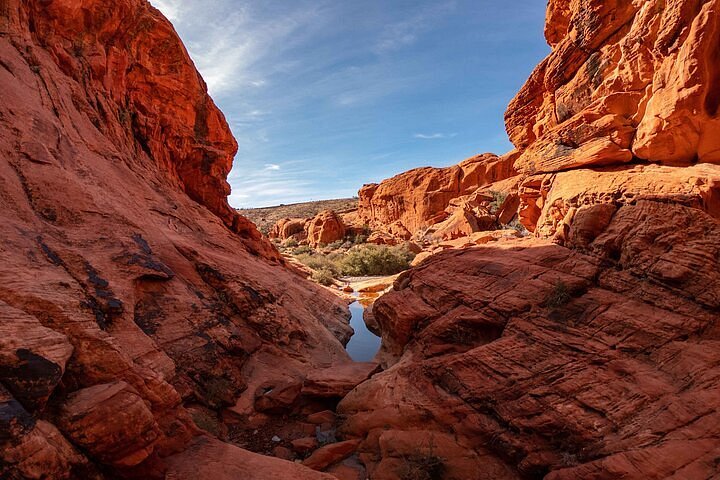
Mount Charleston and Red Rock Canyon are both northwest of the city and make a satisfying loop: Red Rock's scenic drive at opening (reservation required in season), then north on NV-159 and NV-160 to US-95 and up Kyle Canyon for the cool of the afternoon, returning down Lee Canyon. It is about 120 miles and a full, varied day — desert sandstone in the morning, pine forest after lunch. Doing it in that order puts the heat of the day at altitude, which is the whole point in summer.
The other natural pairing is with a Death Valley overnight, since the NV-160 route to Pahrump passes the bottom of the mountain; a return via Kyle Canyon adds a couple of hours and a change of scenery. For a shorter day, the mountain alone plus an early dinner in Summerlin on the way back — see the neighborhoods hub — is a favourite local Sunday, and our day trips ranking shows where it sits against the rest.


