
What the Las Vegas Grand Prix actually is
The Formula 1 Las Vegas Grand Prix is a night race run on a temporary street circuit that uses Las Vegas Boulevard itself as its main straight. The track loops roughly 3.8 miles past the Bellagio fountains, the Venetian, Wynn and the Sphere before returning to a purpose-built paddock building on Koval Lane east of the Strip. Cars race under the resort lights on Saturday night, with practice and qualifying on the preceding evenings.
Since it joined the calendar the race has typically been held in the second half of November, sitting a week or two before the National Finals Rodeo and just ahead of Thanksgiving. Sessions run late in the evening to suit European and Asian television audiences, which means the main action on the Strip is happening between roughly 8pm and midnight. Check the official Formula 1 site for this year's dates, because the exact weekend has shifted slightly between editions.
Ticket types and realistic price ranges
Tickets fall into three broad tiers. General-admission and grandstand seats in the zones along the Strip and around the Sphere sit at the entry level, typically several hundred dollars for a three-day pass as of 2026. Mid-tier grandstands with better sightlines of the main straight and turns run into the low thousands. Hospitality packages at the resorts along the track (Bellagio, Caesars Palace, Wynn, the Venetian) and in the paddock club start in the mid four figures and go far beyond that with food, drink and pit-lane access included.
Prices dropped noticeably after the first edition and the promoter has since introduced cheaper single-day and general-admission options, so the range is wider than it was. Buy from the official race site or the resort selling the hospitality package; resale prices swing wildly in the final week and are sometimes below face value. Everything is check-the-official-site territory; do not rely on figures from a previous year.
What happens to hotel prices
Race weekend is reliably the most expensive weekend of the year on the Strip. Resorts with rooms facing the circuit, above all Bellagio, Cosmopolitan, Paris, Caesars Palace, the Venetian and Wynn, treat their track-view rooms as premium inventory and price them accordingly, with minimum stays of three or four nights common. Even hotels well away from the track raise rates because the whole city is full.
The pattern to watch: rates are set very high when the calendar is announced, soften somewhat over the spring and summer if demand is slower than expected, then climb again in the final six weeks. If you are committed to attending, booking a refundable rate early and re-checking monthly is the safest approach. If you are not attending, the week is worth avoiding entirely; the following week, over Thanksgiving, is dramatically cheaper. See our hotels guide for how resort fees and minimum stays work.
Road closures and getting around
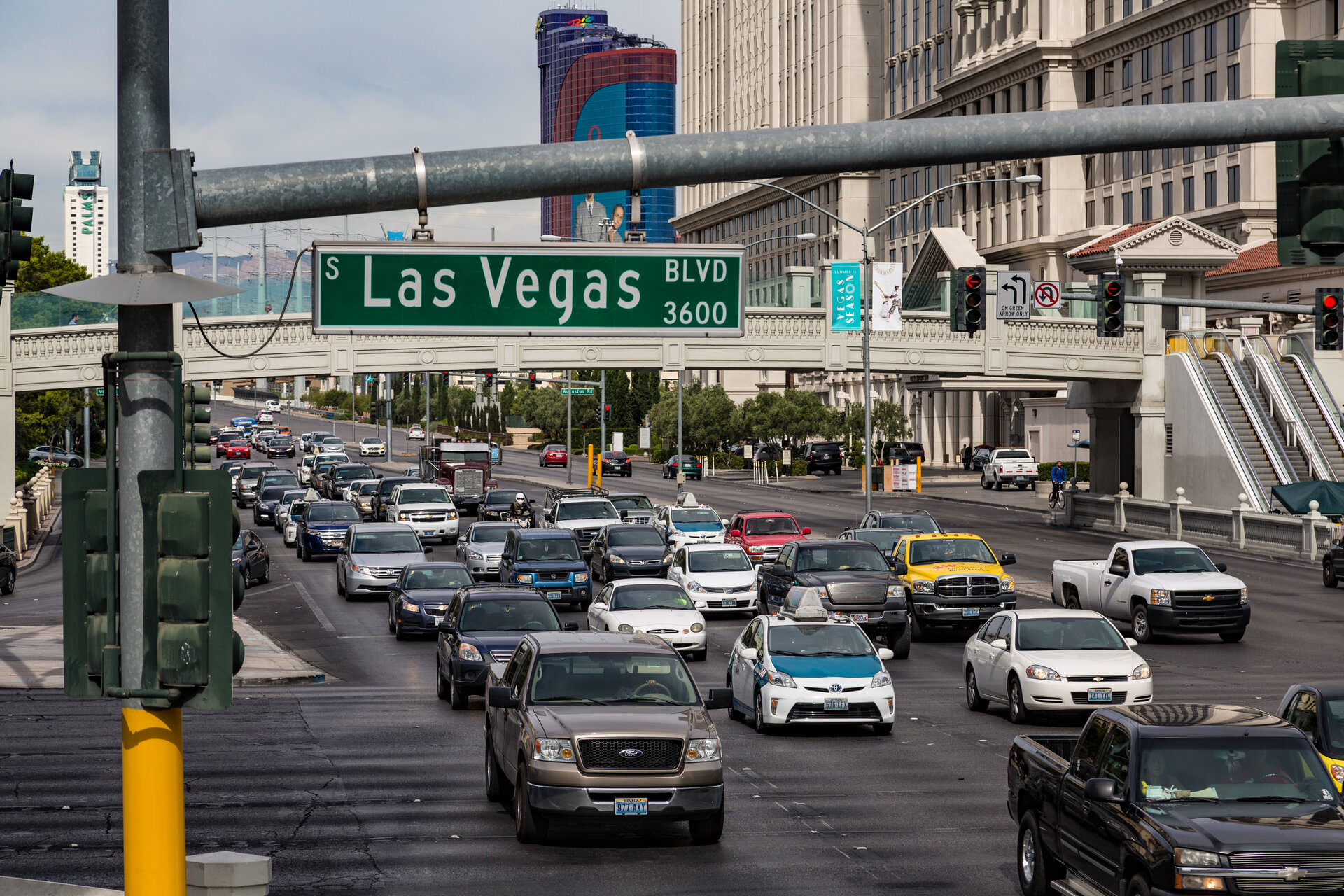
This is the part that affects everyone, not just fans. Construction of grandstands, bridges and barriers along Las Vegas Boulevard begins weeks before the race, narrowing sidewalks and closing lanes. During race week itself, sections of the Strip, Koval Lane, Sands Avenue and Harmon Avenue close to traffic for hours at a time, and pedestrian crossings are re-routed over temporary bridges.
Practically, that means rideshare pickups move to designated locations away from the track, taxi lines are long, and walking between resorts on opposite sides of the Boulevard can take far longer than usual. The monorail runs on the east side of the Strip, away from most closures, and becomes the most reliable way to move north-south. Allow double your normal time to reach LAS on race days and check the official closure map, which is published a few weeks out.
Where to watch if you do not have a ticket
The circuit is screened along most of its length, so free trackside views are limited, but the atmosphere is not. Resorts along the track build viewing platforms, rooftop parties and restaurant packages; some of those are cheaper than a grandstand and include dinner. Bars and lounges with windows over the Strip fill early, and the sound of the cars carries across the whole central Strip, which is an experience in itself.
For a few days the Sphere runs race-themed displays and the fan zones near it host driver appearances, concerts and simulators, some with free access. Sportsbooks take bets on the race and show every session on the big screens with no cover. If you simply want to be in town for the buzz, base yourself in the central Strip and treat the week as one enormous street party rather than a race you need a seat for.
Insider tips and mistakes to avoid
- It is cold. Late November nights in the desert drop into the 40s Fahrenheit, and grandstand seats are exposed. Bring layers and a hat; visitors dressed for a pool trip are miserable by lap 20.
- Sessions end near midnight and the whole crowd leaves at once. Have a walking route back to your hotel rather than relying on a car.
- Ear protection matters, especially for children and for seats near the main straight.
- Do not book a track-view room expecting to watch from the window. Some views are blocked by grandstands and many resorts require a hospitality package for those floors.
- Reserve restaurants the day your tickets are confirmed. Our dining guide lists places that take reservations well ahead.
- If you are flying in for the race, arrive Wednesday. Thursday flights are expensive and the airport is crowded.
Fitting the race into a longer trip
The race takes three evenings, which leaves the days free. Many fans pair it with a half day at Red Rock Canyon or a Hoover Dam trip from our attractions guide, both of which are quiet in November and unaffected by the closures once you are out of the city. A show earlier in the week is easy to fit, since headliners often schedule around the race; see how to buy show tickets for timing.
Plan for a recovery day after the race before doing anything with an early start. If you have five or more days, the structure that works is arriving Wednesday, doing the desert on Thursday daytime, attending practice and qualifying in the evenings, racing Saturday and leaving Monday when flights are cheaper and the barriers are coming down.


