The route and the seven stations
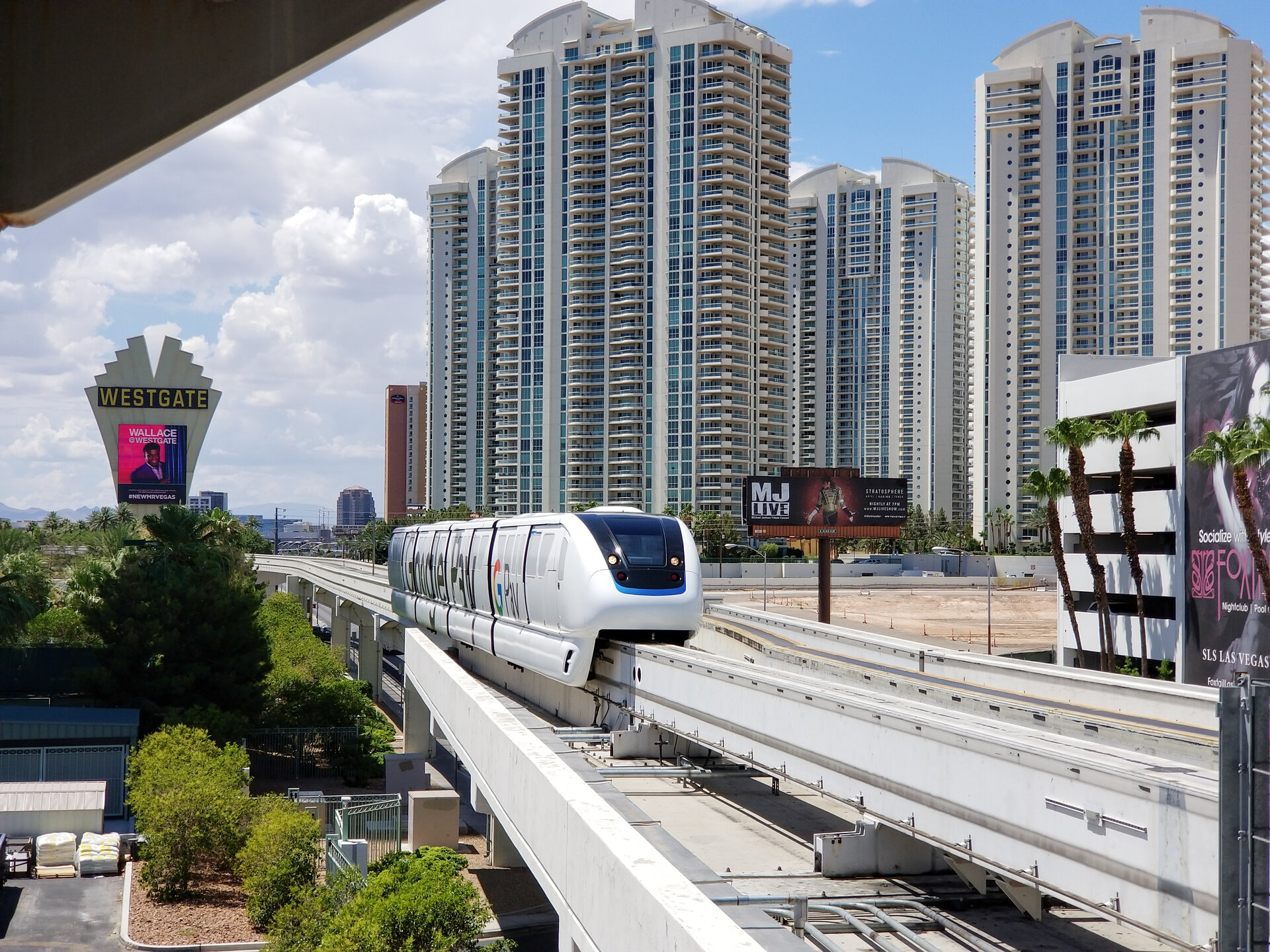
The Las Vegas Monorail is an elevated, driverless line running 3.9 miles along the east side of the Strip — behind the resorts, not in front of them. From south to north the stations are: MGM Grand, Horseshoe/Paris (formerly Bally's), Flamingo/Caesars Palace, Harrah's/The LINQ, Las Vegas Convention Center, Westgate and Sahara. End to end takes about 15 minutes; trains run every 4–8 minutes. The whole line is on the east side of Las Vegas Boulevard, so from Bellagio, Caesars, the Venetian or Wynn you must cross the Strip first.
The station names oversell the convenience. "Flamingo/Caesars Palace" is at the back of the Flamingo, a 10–15 minute walk through the casino from the Boulevard, and Caesars is across the street on top of that. "Harrah's/The LINQ" is genuinely close to the LINQ Promenade and the High Roller. "MGM Grand" is at the far east end of an enormous property. Budget a solid ten minutes from any station to the Strip sidewalk.
Fares and passes
As of 2026, a single ride is in the $5–6 range, a one-day unlimited pass is roughly $13–15, and multi-day passes (two through seven days) drop the per-day cost considerably — a three-day pass runs about $29–32 and a five-day around $40–45. Check lvmonorail.com for current pricing; fares have changed several times and discount promotions appear regularly, especially for convention attendees. Tickets are sold at vending machines at every station, online with a mobile ticket, and often via convention badges that bundle Monorail access.
The maths is simple: a day pass pays for itself on the third ride. If you are staying at an east-side resort and plan to do the Convention Center, Sahara and the LINQ in a day, buy the pass. If you are taking one trip to the Convention Center and back, buy two singles. Children five and under ride free with a paying adult.
When the Monorail beats everything else
There are three situations where the Monorail is the best transport in the city. Conventions: the Las Vegas Convention Center station opens straight into the complex, and during CES, SEMA or any large show the surrounding roads are gridlocked while the trains glide past. Weekend nights on the east side: when the Boulevard is jammed and rideshare is surging, MGM Grand to the LINQ is a 7-minute ride for a few dollars. Heat: the stations and trains are air-conditioned and the route avoids the sidewalk altogether.
It also connects a few things that are otherwise awkward. Sahara station is a short walk from the Strat and the north end of the Strip; Westgate station serves a big resort with its own sportsbook and cheaper rooms; and the LINQ station puts you at the High Roller and the Promenade. For deciding whether to stay on the east side to take advantage of this, see our hotels and resorts guide.
The limitations, honestly
The Monorail does not go to the airport, despite decades of proposals. It does not serve the west side of the Strip at all — Bellagio, Caesars, the Venetian, Wynn, Resorts World, Mandalay Bay and Luxor are all on the wrong side. It does not go downtown to Fremont Street. It stops running relatively early on some nights (see hours below), so it is not a reliable ride home from a late show. And the walk from station to Strip at some stops eats much of the time saved.
For a west-side visitor, then, it is a curiosity rather than a tool. For a trip that includes the Convention Center, Wynn (a short walk from the Convention Center station across Paradise/Sands) or a north-end resort, it is worth building around. If you are staying at Mandalay Bay or Luxor, the free Mandalay Bay–Excalibur tram plus the bridge to MGM Grand gets you to the south terminus in about 20 minutes.
Hours and frequency
The Monorail typically runs from 7 a.m. to around midnight Monday, and until 2 or 3 a.m. Tuesday through Sunday, though hours have shifted several times since the line reopened under LVCVA ownership and they extend during major conventions. Confirm the day's schedule on the official site or the signage at the station before relying on it for a late return. Trains run every 4–5 minutes at peak and every 8–10 minutes off-peak.
The stations are unstaffed but monitored; there are elevators at each one, and the whole system is wheelchair-accessible. Strollers are fine. Trains are short (four cars) and get packed at convention rush hours — if you are heading to the Convention Center at 9 a.m. during a major show, expect to let a train or two go by.
How to use it well
- Buy passes on your phone before you reach the station; the vending-machine queues at MGM Grand and the Convention Center are slow at peak.
- Learn the route from the Strip to your nearest station once, in daylight. Most resorts sign it as "Monorail" from the casino floor, but the walk is long and the signs are easy to lose.
- Combine it with the Strip's pedestrian bridges: Monorail to Flamingo, bridge to Caesars, and you have reached the west side without a car.
- For the north end, Sahara station plus a short walk covers the Strat and the Sahara itself; the walk on to Resorts World along Sahara Avenue is doable but hot.
- Do not plan to ride it to or from the airport, or to downtown. The Deuce covers downtown; rideshare covers the airport.
Monorail vs the other options
Against rideshare, the Monorail wins on price and on predictability during traffic, and loses on door-to-door convenience. Against the Deuce, it wins on speed (15 minutes end to end versus 45 or more on the bus) but covers less ground and skips downtown. Against walking, it wins on anything longer than two resorts on the east side. The best Las Vegas transport plan uses each for what it is good at; our car-free guide stitches them together, and the transportation hub has the full cost comparison.