
How to think about Las Vegas museums
Las Vegas does not have an encyclopaedic art museum or a natural-history palace, and it is not trying to. What it has instead is a cluster of sharply focused, well-funded institutions that tell the story of this specific place — organised crime, neon, nuclear testing, pinball, the Old West — with production values borrowed from the casino industry. The two headline museums, the Mob Museum and the Neon Museum, are both Downtown and both genuinely excellent; most of the rest are within a 15-minute drive of the Strip.
The practical grouping is by location. Downtown has the Mob Museum, Neon Museum and Discovery Children's Museum within a mile of each other. Just east of the Strip sits the Atomic Museum on the UNLV side; the Pinball Hall of Fame is on Las Vegas Boulevard near the Welcome sign. The Strip itself hosts touring-exhibition-style shows inside Luxor. Below, each is ranked by how much it rewards a visit and how long it takes.
The Mob Museum: the one to do first
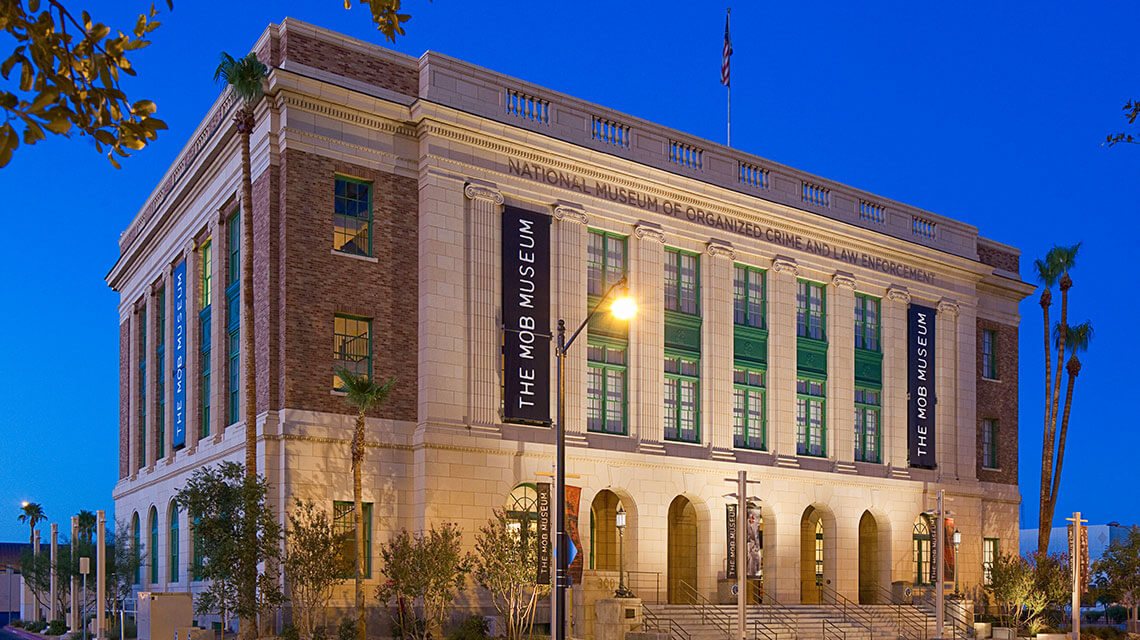
The National Museum of Organized Crime and Law Enforcement, known to everyone as the Mob Museum, fills the 1933 federal courthouse on Stewart Avenue where the 1950 Kefauver hearings were held in the very courtroom you can sit in today. Three floors trace the mob from Prohibition through the Las Vegas casino-skim years to modern cartels, with artefacts including a section of the St Valentine's Day Massacre wall and interactive exhibits on wiretapping and weapons training. The Underground in the basement is a working speakeasy and distillery with its own entrance and password, open in the evenings.
Allow two to three hours; it is dense and most visitors run out of energy before they run out of exhibits. General admission as of 2026 sits roughly in the $30–$40 range with paid add-ons for the Crime Lab and firearms simulator experiences, check the official site for current pricing. Book online for a timed entry on weekends. Our full Mob Museum guide covers the add-ons and the speakeasy in detail.
The Neon Museum: the most photogenic
The Neon Museum's outdoor Boneyard on Las Vegas Boulevard North holds more than 250 salvaged signs — the Stardust, the Moulin Rouge, the Golden Nugget's original lettering, motel arrows and the giant skull from the Treasure Island era — laid out on gravel paths with a restored La Concha Motel lobby as the entrance. Roughly two dozen signs are restored and lit; the rest are left in glorious decay. Visits are timed, and night entries, when the restored signs glow and the others are dramatically lit, book out days ahead.
A visit takes about an hour, plus the after-dark Brilliant! show if you add it. Expect admission roughly in the $20–$35 range depending on time and whether a guide is included, as of 2026, check the official site. Photography for personal use is allowed; tripods and commercial shoots need a permit. Combine with the Mob Museum, half a mile south, for the definitive Downtown history afternoon. Full details in our Neon Museum guide.
The Atomic Museum: the most surprising
The National Atomic Testing Museum, now branded the Atomic Museum, is an affiliate of the Smithsonian Institution tucked beside the Desert Research Institute on East Flamingo Road, a ten-minute drive east of the centre Strip. It documents the Nevada Test Site, 65 miles northwest of the city, where nearly a thousand nuclear devices were detonated between 1951 and 1992 — and the strange culture that grew up around it, when hotels held "Miss Atomic Bomb" contests and guests watched mushroom clouds from rooftops.
Highlights are the Ground Zero Theatre, which simulates an atmospheric test with sound and pressure, a real section of the tunnels used for underground tests, Cold War-era artefacts and a thoughtful treatment of the downwinders affected by fallout. It is compact — 90 minutes is plenty — and admission as of 2026 is roughly in the $20–$30 range, check the official site. It is the best museum in the city for anyone interested in twentieth-century history, and almost nobody on the Strip knows it exists.
Pinball Hall of Fame: the most fun per dollar
The Pinball Hall of Fame is a 25,000-square-foot warehouse on Las Vegas Boulevard South, opposite the south end of the Strip and a short walk from the Welcome to Fabulous Las Vegas sign, holding several hundred playable pinball and arcade machines from the 1950s to the present. It is run as a non-profit by a collector who maintains every machine himself, and the rule is simple: admission is free and you play with quarters, most games costing 25 to 75 cents. Profits go to charity.
Bring a roll of quarters (change machines are inside) and budget an hour that becomes two. Machines are grouped roughly by era, with placards explaining the history of the rarer tables. It is air-conditioned, casual, good for every age and one of the few things in Las Vegas that a family of four can do for less than $20. It also makes an easy pairing with Seven Magic Mountains or the outlets if you are heading south with a car.
For families: Discovery Children's Museum and the science options
The Discovery Children's Museum sits in Symphony Park downtown, beside the Smith Center for the Performing Arts, and is the best rainy-day or hot-day option for children up to about ten. Three floors hold a 70-foot climbing tower, a water-play lab, a pretend town with a grocery store and hospital, and a young-toddler zone. Admission as of 2026 is roughly in the $15–$20 range per person including adults, check the official site, and weekday mornings are calm while weekends fill with local families.
Also worth knowing: the Nevada State Museum at the Springs Preserve on the west side of downtown, which pairs a strong regional-history collection (mammoth skeleton, Hoover Dam construction, showgirl costumes) with 180 acres of botanical gardens and trails on the site of the springs that founded the city. It is a half-day on its own and the gardens are lovely from October to April. Our things to do with kids guide slots these into full family days.
On the Strip: Titanic, Bodies and the exhibition halls
Luxor hosts two long-running exhibitions that are effectively permanent: Titanic: The Artifact Exhibition, which shows several hundred objects recovered from the wreck, a recreated grand staircase and a walk-through "iceberg" you can touch, and Bodies…The Exhibition, which displays preserved human bodies and organs to explain anatomy. Both are professionally staged and take about an hour each; combined tickets are commonly offered, with single-exhibition admission as of 2026 roughly in the $30–$40 range, check the official site. Titanic is the stronger of the two for a general audience.
Around the Strip you will also find rotating pop-up and touring exhibitions, wax museums and various themed "experience" attractions. Most are fine for a rainy hour and none would make this list on merit. If you have limited time and want one indoor cultural hour without leaving the Strip, choose Titanic; if you can spare a rideshare, choose any of the Downtown or Atomic options above instead.
Planning a museum day
Two itineraries work well. The Downtown history day: Neon Museum daytime visit or, better, a booked night slot; Mob Museum in the afternoon (three hours); a drink in The Underground; then the Fremont Street Experience canopy shows after dark, all within a mile. Park once at the Mob Museum lot or a Fremont garage and walk. The south side day: Pinball Hall of Fame in the morning, the Welcome sign, lunch, then the Atomic Museum on the way back to the Strip.
Tickets: buy online for the Mob and Neon museums, which sell timed entries and sell out on weekends and holidays; walk in everywhere else. Multi-attraction passes sold in Las Vegas sometimes bundle several of these museums, and they can pay off for a two- or three-museum day — do the maths against individual prices first. For more air-conditioned ideas when the heat is on, see indoor things to do.


