
The real distances
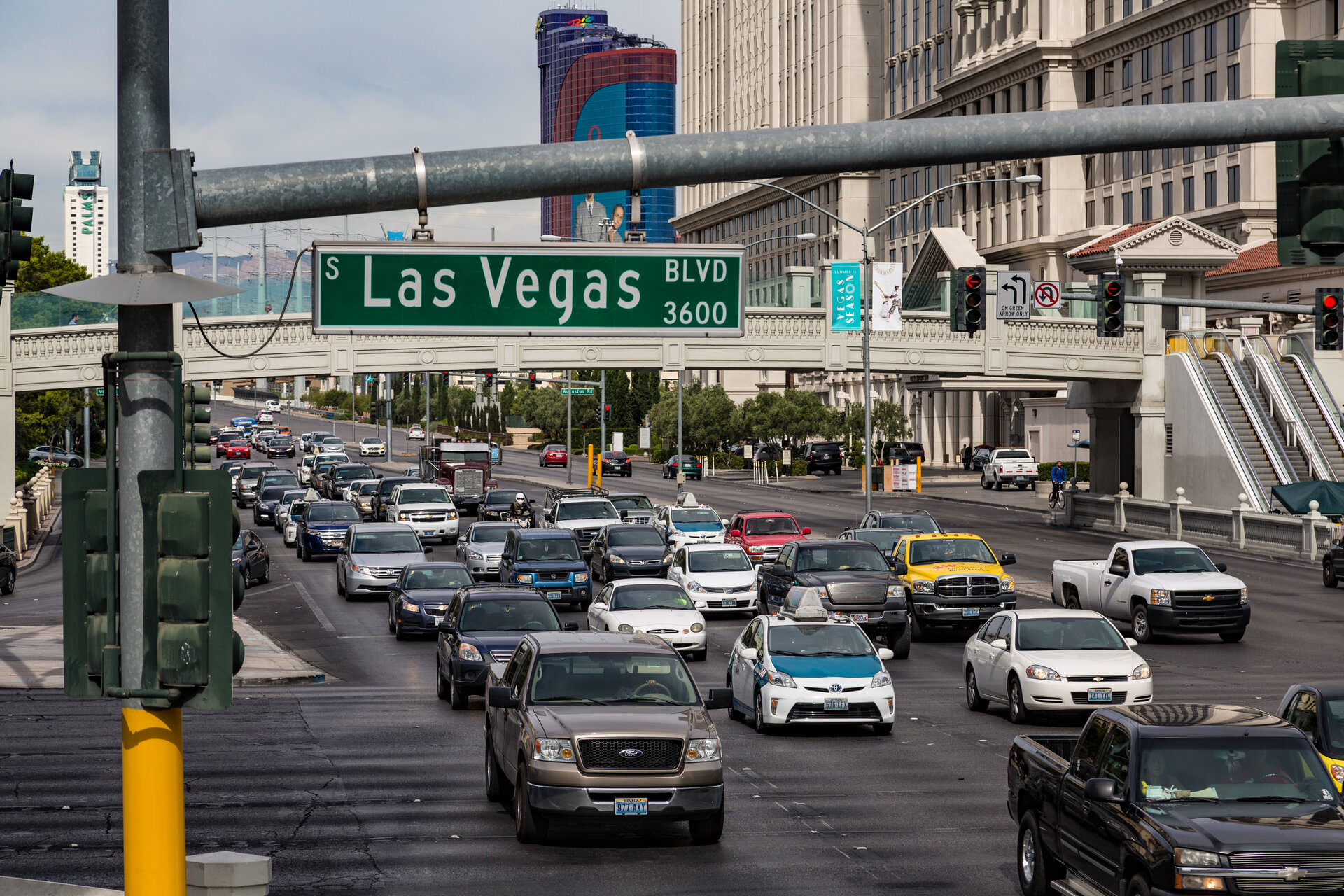
Las Vegas Boulevard from Mandalay Bay to the Strat is about 4.2 miles of sidewalk, and the sidewalk is the honest measure because you cannot cut corners — the resorts are walled by driveways, fountains and garages. Some working numbers, measured entrance to entrance and assuming a steady pace with no stops: Mandalay Bay to MGM Grand, 25 minutes; MGM Grand to Bellagio, 20 minutes; Bellagio to the Venetian, 20 minutes; the Venetian to Wynn, 12 minutes; Wynn to Resorts World, 12 minutes; Resorts World to the Strat, 25 minutes. Add 5–10 minutes at each end to get from the sidewalk to anywhere useful inside the resort.
So "the Strip" is not one walk; it is four or five clusters. South (Mandalay Bay to Tropicana), centre-south (Park MGM to Bellagio), centre (Caesars to the Venetian), north (Wynn to Resorts World) and the far north (Sahara and the Strat). Inside a cluster, walk. Between clusters, think about a tram, the Monorail, the Deuce or a ride.
The pedestrian bridges you cannot avoid
At the busiest intersections the county has removed street-level crossings entirely, so you must use the elevated pedestrian bridges. The main ones are at Tropicana (linking MGM Grand, Tropicana site, Excalibur and New York-New York), Flamingo (Bellagio, Caesars, Bally's/Horseshoe, Cromwell), Spring Mountain/Sands (Wynn, Venetian, Treasure Island, Fashion Show) and the newer bridges around Park MGM/Cosmopolitan and at Harmon. Each has escalators and elevators, though escalators are frequently out and the elevators are slow; allow five minutes per bridge, more with a stroller.
The bridges are also where the Strip is at its most crowded: street performers, hawkers, photographers and tourists stopping for the view. Keep moving, hold bags in front of you, and be aware that the escalators dump you inside a casino or a shopping level, not on the sidewalk — the Flamingo bridge lands you in the Forum Shops side of Caesars, which is a ten-minute wander from the front desk.
The heat is the real hazard
From late May to mid-September, afternoon highs of 100–115°F are ordinary and the sidewalk is hotter than the air. Heat illness is the main reason paramedics are called to the Strip in summer, and the victims are usually visitors who set out to walk from one end to the other at 2 p.m. The rules: walk early (before 10 a.m.) or after dark; carry water — every casino has free water at the bars if you ask, and convenience stores on the Boulevard sell it cheaply; duck into a casino every 15 minutes of exposure; and keep alcohol modest while you walk, because alcohol and heat multiply each other.
In winter, the opposite surprise: December and January evenings drop into the 30s and 40s with a wind that funnels between the towers. A light jacket after dark is not optional. Spring and autumn are perfect walking weather, which is a good part of why they are the best times to visit — see best time to visit.
Walking indoors: the covered routes
A surprising share of the Strip can be walked without going outside. The MGM cluster from Park MGM through Aria, Crystals, Vdara and the Cosmopolitan to Bellagio is almost entirely enclosed or shaded. Caesars, the Forum Shops and the bridge to the Mirage site cover a long stretch. The Venetian and Palazzo are one vast interior, and the Grand Canal Shoppes connect through to the Sands Expo. On the east side, the LINQ Promenade and the connected casinos from the Flamingo to Harrah's are a near-continuous indoor run. Learning these routes turns a brutal summer walk into a series of air-conditioned strolls with short outdoor hops in between.
The gaps you cannot avoid outdoors: Mandalay Bay to Luxor (or use the tram), Excalibur to New York-New York (bridge), the stretch in front of the Cosmopolitan, the Venetian to Wynn along the Sands bridge, and everything north of Wynn.
Safety and street life
The Strip is busy, lit and patrolled around the clock, and walking between resorts at any hour is normal. The nuisances are persistent rather than dangerous: costumed characters who expect a tip for a photo, card-snappers handing out escort flyers, people selling water or CDs, and the occasional aggressive panhandler. A polite "no thanks" and continued movement handles all of them. Pickpockets work the bridge crowds and the areas in front of the Bellagio fountains; front pockets and zipped bags. Keep drinks covered and never leave a phone on a bar.
Two stretches are worth avoiding on foot: north of the Strat toward downtown, which is a long, empty and sometimes rough two miles, and the side streets east of the Boulevard late at night. For the downtown trip, take the Deuce or a ride.
A sensible walking plan for a day
The way locals show friends the Strip is one cluster per session. Morning: the south — Mandalay Bay's Shark Reef, the Luxor pyramid, the Excalibur bridge, New York-New York's Brooklyn Bridge — around two miles with the tram helping. Late afternoon: a ride to Bellagio, the conservatory, the fountains, across the bridge to Caesars and the Forum Shops, along to the Venetian for the canals at dusk. Evening: a ride to the north end for Wynn, the Fashion Show Mall and Resorts World, or up the Strat. That covers the whole Boulevard in a day with maybe five miles on foot, none of it in the worst heat. For a structured version, see our itineraries and the guide to the Strip by section.
Mobility, strollers and scooters
The Strip is flat and every bridge has an elevator, so it is manageable with a wheelchair or stroller — but the distances are the challenge, and pushing a stroller for four miles in heat is a serious undertaking. Mobility scooter rentals are widely available for delivery to your hotel, typically $30–60 a day, and they are a normal sight on the sidewalks. Every resort has accessible entrances, and the trams, Monorail and Deuce are all level-boarding. Plan the same way: clusters, not the whole Boulevard, and wheels between them.