
What the Neon Museum is
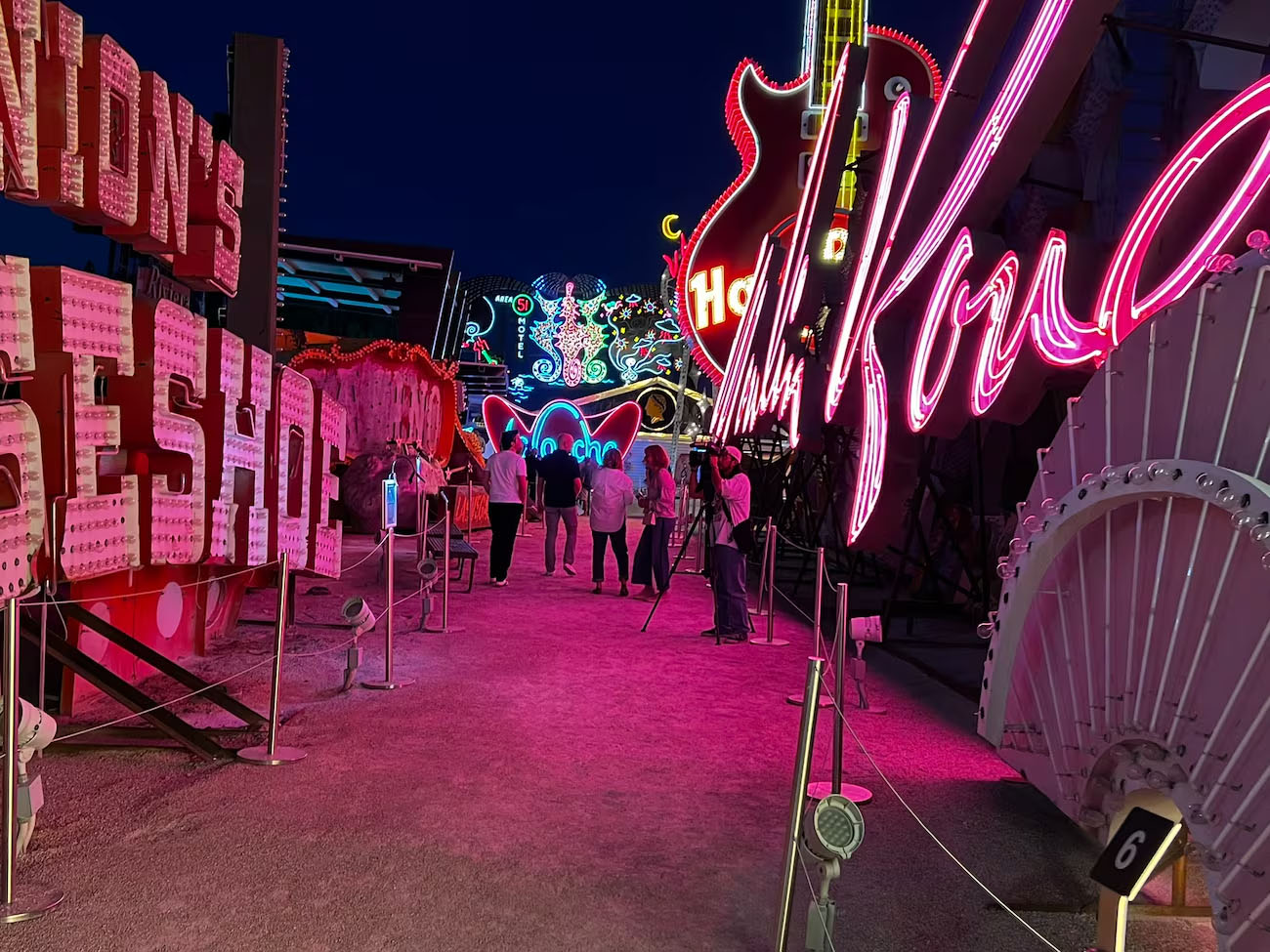
The Neon Museum is a non-profit at 770 Las Vegas Boulevard North, a few blocks north of the Fremont Street Experience, that has been rescuing the city's discarded signage since 1996. Its main attraction is the Neon Boneyard, a roughly two-acre outdoor lot where more than 250 signs from demolished or rebranded casinos, motels, wedding chapels and diners lie propped against each other in the open air. A minority have been fully restored and light up; most are unrestored, rusting and — to most eyes — more beautiful for it.
The visitor centre is itself an exhibit: the shell-shaped lobby of the 1961 La Concha Motel, designed by Paul Revere Williams and moved here in pieces from the Strip. Inside the yard you will find the Stardust letters, the Moulin Rouge script, the Hard Rock guitar, the Binion's Horseshoe, the Golden Nugget and the Silver Slipper, plus a lot of smaller motel and restaurant signs that tell the story of the old Boulder Highway and Fremont Street better than any museum wall text.
Day visit or night visit?
This is the decision that shapes the whole experience. A daytime visit shows the signs as sculpture — the rust, the bulb sockets, the patched sheet metal — and is the better choice for anyone interested in design and history. Photographs are crisp, you can read the details and the yard is less crowded. The downside is the sun: there is no shade, and from May to September a midday visit is genuinely unpleasant.
A night visit is what the marketing shows. The restored signs are lit, the unrestored ones are picked out with coloured floodlights, and the yard turns into the neon dreamscape people expect. Night tickets cost more and sell out further ahead, and the photos are moodier but harder to get right on a phone. Our recommendation: the last hour of daylight into dusk if the timing works, so you get both. In summer, go at night without hesitation. In winter, an afternoon slot is comfortable and cheaper.
Tickets, tours and what they cost
The museum sells timed-entry tickets online and walk-ups are not guaranteed, especially at night. As of 2026 general admission for a self-guided visit sits roughly in the $20s by day and the $30s at night, with reduced rates for Nevada residents, seniors, students, veterans and children; guided tour add-ons push the price higher. Check the official site for current pricing, hours and the tour schedule, all of which change seasonally.
Self-guided visits give you a map and roughly an hour of wandering; a mobile audio guide is usually available. The guided tours, led by docents who know the back-stories — which mob figure owned which motel, why the Stardust font looks the way it does — are the better product for first-timers and run about 45 minutes to an hour. Book the tour if you like stories; go self-guided if you mainly want photographs and time to linger.
Brilliant! and the light shows
In the North Gallery, a second, smaller yard, the museum runs a projection show called Brilliant! that uses mapped light to make dozens of dead, unrestored signs appear to blaze back to life, synchronised to a soundtrack of Vegas-era music. It runs after dark, lasts around 30 minutes and is sold as an add-on or bundled with night admission. It is very good and, for many visitors, the highlight of the evening; if you are choosing between a plain night ticket and one that includes the show, take the show.
The museum also runs occasional special programmes — behind-the-scenes conservation tours, sign-lighting events, rotating exhibits in the visitor centre — and has a working sign-restoration partnership with YESCO, the company that built most of the originals. Check the events calendar before you book; a lighting ceremony can be worth planning a visit around.
Photography rules and tips
Personal photography with a phone or camera is allowed and encouraged. Tripods, professional lighting, drones and commercial shoots are not permitted without a separate paid arrangement, and staff do enforce it. You may not climb on, touch or lean against the signs — much of the yard is fragile and some edges are sharp. Keep to the gravel paths.
- Bring a wide lens or use your phone's ultra-wide; the yard is tight and the big signs are close.
- At night, tap to expose for the neon rather than the sky, and switch off flash — it kills the glow.
- The Stardust letters, the La Concha lobby at dusk and the pile of small motel signs near the back are the classic shots.
- Weekday mornings in cooler months are the emptiest for people-free frames.
The museum also hosts a small number of paid portrait sessions and weddings; if you see a photographer with lights, they have booked it.
Getting there and what to combine it with
The museum is about a 15-minute walk north of Fremont Street along Las Vegas Boulevard North, past Cashman Center — fine by day, less appealing after dark, when a rideshare for a few dollars is the smarter move. From the Strip, budget 15–20 minutes and the mid-teens to $20s by rideshare; the Deuce bus also runs the length of the Boulevard and stops nearby, see our Transportation hub. There is a small free lot on site.
The natural pairing is a Downtown afternoon-into-evening: the Mob Museum from mid-afternoon, an early dinner on Fremont East, the Neon Museum at dusk and then the canopy show back on Fremont Street. All three sit within a mile of each other. Our museums guide covers how the Neon and Mob museums compare if you only have time for one.
Mistakes to avoid
- Turning up without a ticket on a Friday or Saturday night. Night slots sell out days ahead in peak season.
- A midday summer visit. There is zero shade; 105°F on gravel is not a museum experience.
- Expecting an indoor museum. Apart from the small visitor centre, everything is outside. Dress for the weather.
- Bringing a large bag or stroller. Paths are narrow; travel light.
- Confusing it with the free signs along Las Vegas Boulevard. The city has installed several restored museum-owned signs as public art on the median between Downtown and the Strat — nice, but not a substitute for the Boneyard.
- Rushing. Allow 60–90 minutes; two hours with Brilliant!.


