
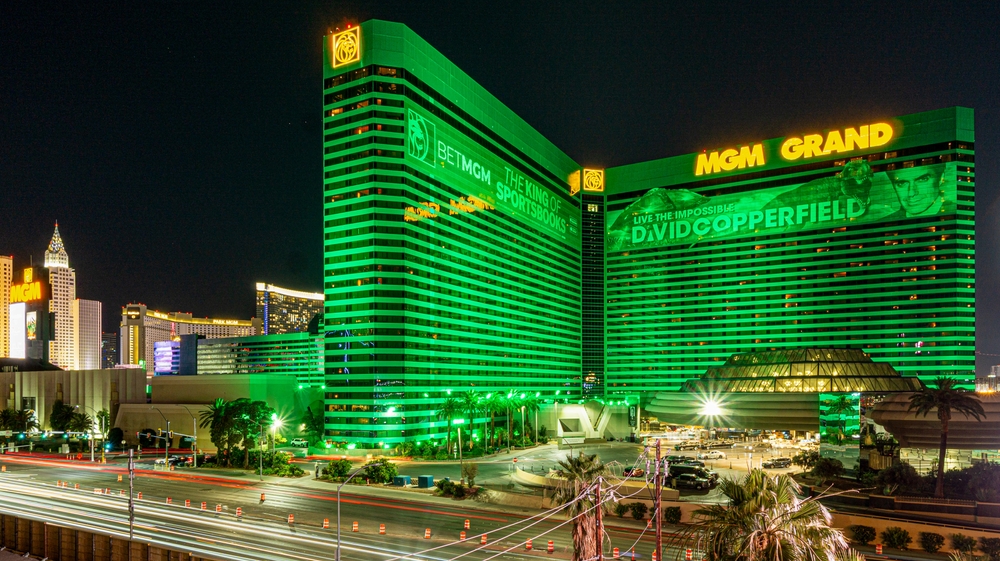
Getting around Las Vegas

Getting around Las Vegas

The Strip is more than four miles long, the walk between two resorts that look next door can take 25 minutes, and every option has a hidden cost or catch. This guide gives you the honest picture: what each way of getting around costs, when it works, and when it does not.

The honest picture: the Strip is bigger than it looks

Las Vegas Boulevard from Mandalay Bay at the south end to the Strat at the north is a little over four miles. On a map it reads as one neighbourhood; on foot it is a city. The resorts are enormous — the walk from the sidewalk to a hotel elevator can be ten minutes on its own — and the sightlines are deceptive because there is nothing human-scale to judge distance against. Something that looks "just across the street" is routinely a half-mile away and involves an escalator, a pedestrian bridge and a walk through a casino.

Add the weather. From late May to mid-September, afternoon temperatures of 100–115°F are normal, and the sidewalk radiates heat long after dark. A walk that is pleasant in February is a genuine health question in July. So the first rule of getting around Las Vegas is simple: plan your days by cluster, not by "the Strip", and use wheels or rails whenever you leave your cluster. Our walking guide lays out the real distances.

Every option, ranked by cost

Here is the whole menu, cheapest first, with realistic 2026 ranges. Check the operators' official sites for current fares.

  • Walking — free, and the right answer within a cluster of two or three neighbouring resorts.
  • Free trams — three short lines on the west side of the Strip: Aria–Bellagio–Park MGM, Mandalay Bay–Luxor–Excalibur, and the tram between the former Mirage site and Treasure Island. See free trams.
  • The Deuce bus — roughly $6–8 for a 2-hour pass, $8–10 for 24 hours, and around $20 for three days, covering the whole Strip and Fremont Street. See the Deuce.
  • Monorail — single rides in the $5–6 range, day passes around $13–15, multi-day passes cheaper per day. Fast, but only on the east side. See the Monorail.
  • Rideshare and taxis — most Strip-to-Strip rides land between $10 and $25 before surge; airport runs $15–30. See rideshare and taxis.
  • Rental car — $40–90 per day plus airport fees, plus $15–25 a day to park at your resort, plus parking wherever you go. See car rental.

What to do on arrival day

Harry Reid International Airport is a mile from the south end of the Strip, so a transfer is short and the mistakes are about price rather than time. Rideshare pickups are in Terminal 1's parking garage (Level 2) and Terminal 3's valet level, and there is a per-trip airport surcharge built into the fare. Taxis queue outside baggage claim with a flat surcharge added to the meter, and the meter fare to a mid-Strip resort is typically $20–30 if the driver takes the direct route — insist on Paradise Road or Swenson, not the I-215 tunnel loop. Shared shuttles exist and cost less per person, but expect to wait while they fill up and stop at several resorts.

If you are travelling as a family or with a lot of luggage, a pre-booked private transfer is often the calmest option and rarely costs much more than a surged rideshare. The airport-transfer booking tool on this page compares prices for your dates. For the terminal-by-terminal detail, read our LAS guide.

How to choose: a simple decision tree

Nearly every Las Vegas transportation question resolves the same way once you know what kind of trip you are taking.

  • Staying on the Strip, no day trips: do not rent a car. Walk within your cluster, use trams, buy a Deuce pass for the long north–south hops and the trip to Fremont Street, and use rideshare late at night or when it is hot. Our car-free guide is the full playbook.
  • Convention at the Las Vegas Convention Center: stay on the east side of the Strip and use the Monorail — it stops at the convention center and beats rideshare during show traffic every time.
  • One or two day trips (Hoover Dam, Red Rock, Valley of Fire): rent a car for those days only, from a Strip-adjacent rental desk rather than the airport, and return it before you go back to the Strip. See getting to Hoover Dam and the Grand Canyon.
  • Staying off-Strip or at a Summerlin/Henderson resort: a car is close to essential.

The costs people forget

Transportation is where Las Vegas budgets quietly break. Resort parking fees are the big one: most MGM Resorts and Caesars Entertainment properties charge overnight guests $15–25 a day for self-parking, and valet runs higher. Rideshare surge after big shows, fights and festivals can double or triple a fare for an hour; walking two resorts north before requesting a ride often halves it. Airport taxi "long-hauling" through the tunnel adds $10–15. And the Monorail or Deuce pass that looked expensive next to a single ride becomes cheap the moment you take a third trip in a day.

The flip side is that some of the best transport in the city is free: the trams, the Convention Center section of the Vegas Loop during shows, hotel shuttles from some off-Strip properties, and the pedestrian bridges that let you cross the Boulevard without waiting for a light. Budget-minded planning is covered further in Las Vegas on a budget.

Accessibility and travelling with kids

The Strip is more accessible than its scale suggests. Every pedestrian bridge has elevators (though some are slow and occasionally out of service), the Monorail and Deuce are fully wheelchair-accessible, the free trams are level-boarding, and the resorts themselves are flat and air-conditioned. Distances remain the challenge; a mobility scooter rental for a few days is a common and sensible choice for anyone who cannot comfortably walk two miles.

With small children, the equation changes toward rideshare — strollers are welcome on trams, buses and the Monorail, but the sheer walking involved wears kids out fast. Car seats are the wrinkle: Uber and Lyft drivers are not required to carry them, and taxis are exempt from Nevada's car-seat law but you will still want one. Bring a lightweight travel seat if you plan to use cars often. See Las Vegas with kids for the full family picture.

Guides in this section

Each page below goes deep on one way of getting around. If you only read three, make them the airport guide (so arrival day goes right), walking the Strip (so you do not overestimate what you can cover on foot) and parking on the Strip (so a car does not ambush your budget). Then plan your clusters using our guide to the Strip and build days around them.

In this section

  • Harry Reid International Airport (LAS): the arrival guide LAS sits a mile from the south end of the Strip, which makes it one of the easiest big-city airports to arrive at — and one of the easiest places to overpay in the first fifteen minutes of your trip. Here is how the terminals, pickups and transfers actually work.
  • Rideshare and taxis in Las Vegas Uber and Lyft are the default way most visitors move around Las Vegas, and taxis are still everywhere on the Strip. Both work well — as long as you know where the pickup zones are, when surge kicks in and how much a ride should cost.
  • The Las Vegas Monorail The Monorail runs 3.9 miles along the east side of the Strip, from MGM Grand to Sahara, with no traffic and no surge pricing. It is fast and cheap for the right trips — and useless for the wrong ones, because the stations sit at the back of the resorts, not on the Boulevard.
  • The Deuce bus and RTC transit The Deuce is the double-decker bus that runs the length of Las Vegas Boulevard 24 hours a day, from south of Mandalay Bay to Fremont Street. A day pass costs less than one short Uber ride. It is slow, but it is the cheapest way to see the whole Strip and downtown.
  • Free trams on the Strip Three short, free, air-conditioned trams connect clusters of resorts on the west side of the Strip. None of them goes far, but each one replaces a fifteen-minute walk in the heat, and knowing where they are changes how you plan an afternoon.
  • The Vegas Loop and the Boring Company tunnels The Vegas Loop is a network of narrow tunnels in which Teslas with drivers shuttle passengers between stations. The Convention Center section is free during shows; the public stations at Resorts World and Westgate charge a fare. It is a novelty today with a very ambitious map on paper.
  • Do you need a rental car in Las Vegas? For a Strip-only trip, a rental car is usually a mistake: you will pay for it, pay to park it at your resort, and then pay again to park everywhere you drive it. For day trips to Red Rock, Hoover Dam or Valley of Fire, it is the best money you will spend. Here is how to decide.
  • Parking on the Strip: fees, free lots and the tricks Free parking on the Strip ended for most big resorts in 2016 and it has not come back. Today most Strip garages charge for self-parking after the first hour, valet costs more, and a handful of resorts still let you park free. Know which is which before you drive.
  • Walking the Strip: what the map does not tell you Every first-time visitor makes the same mistake: the Bellagio looks a few minutes from Caesars, and it is; the Bellagio looks a few minutes from Mandalay Bay, and it is nearly an hour. The Strip is walkable in pieces, not as a whole, and the heat and the bridges decide the pieces.
  • Getting to Hoover Dam and the Grand Canyon Hoover Dam is a 45-minute drive. The Grand Canyon is not one place: the West Rim Skywalk is two and a half hours away, the South Rim is four and a half. Which rim, and how you get there, decides whether the day is a highlight or a twelve-hour endurance test.
  • Getting around Las Vegas without a car Most visitors never need a car in Las Vegas. The Strip, downtown, the airport and the big attractions are all reachable with a mix of walking, free trams, the monorail, the Deuce and the occasional rideshare — and a tour bus handles the day trips. Here is the system that works.
  • Getting between Downtown and the Strip Fremont Street is about five miles north of the centre of the Strip — too far to walk, and the stretch between them is not somewhere you want to walk anyway. The choice comes down to a cheap, slow bus or a quick rideshare, and the best answer changes with the time of day.

Frequently Asked Questions

How long does it take to walk the whole Las Vegas Strip?

From Mandalay Bay to the Strat is a little over four miles of sidewalk with bridges and detours, so allow two to two and a half hours of steady walking with no stops. Almost nobody should try it in summer daytime heat.

Do I need a rental car in Las Vegas?

Not for a Strip-and-downtown trip. Walking, trams, the Monorail, the Deuce and rideshare cover it, and resort parking fees make a car an expense with little payoff. Rent for the specific days you leave the city.

What is the cheapest way to get from the airport to the Strip?

The RTC bus (routes serving the airport connect to the Deuce) is the cheapest at a few dollars, but it is slow with luggage. A rideshare at $15–30 or a shared shuttle is what most visitors sensibly choose.

Is the Las Vegas Monorail worth it?

Yes if you are staying on the east side of the Strip or attending a convention; the stations sit behind MGM Grand, Bally's/Horseshoe, Flamingo, Harrah's/LINQ, the Convention Center, Westgate and Sahara. It does not serve the west side or the airport.

How much is a Deuce bus pass?

As of 2026, expect roughly $6–8 for a 2-hour pass, $8–10 for 24 hours and around $20 for three days. Buy in the rideRTC app or at vending machines at major stops; check rtcsnv.com for current fares.

Are Uber and Lyft cheaper than taxis in Las Vegas?

Usually, outside of surge. A standard Strip-to-Strip rideshare is $10–25; a taxi on the meter for the same trip is often a few dollars more. During surge after big events, taxis can be the better deal.

Is parking free anywhere on the Strip?

A handful of resorts still offer free self-parking, including Treasure Island, Sahara, Circus Circus and Resorts World, and off-Strip casinos almost all park free. Most MGM and Caesars properties charge; higher loyalty tiers can waive the fee.

What is the Vegas Loop?

A Boring Company tunnel system in which drivers shuttle passengers in Teslas between stations. The Convention Center section is free during events; the Resorts World and Westgate stations charge a fare. The larger city-wide network is still under construction.

How far is Downtown Las Vegas from the Strip?

About five miles from the centre of the Strip to Fremont Street — roughly 15–20 minutes by rideshare or 30–45 minutes on the Deuce, depending on traffic.

Is it safe to walk the Strip at night?

The Strip itself is busy, brightly lit and heavily patrolled, and walking between resorts at night is normal. Use the pedestrian bridges, keep valuables secure and avoid the quiet blocks north of the Strat or the Boulevard between the Strat and downtown on foot.