
Why a non-gambling trip works better than people expect
The casino floor is the loudest part of Las Vegas, but it is no longer the part that pays the bills. Resorts on the Strip now earn more from rooms, food, shows and attractions than from gaming, which is why the last decade of building has been about domes, observation wheels, immersive art and celebrity restaurants rather than more slot machines. If you never touch a chip, the city is still built for you.
The practical upside is that non-gamblers get the good parts without the expensive parts. You will not be tempted by a "free" drink that costs a hundred dollars in losses, you will not lose an afternoon you meant to spend at Red Rock Canyon, and you can plan your days around opening hours and daylight rather than around a poker room. The one thing to accept: you still have to walk through casinos to get almost anywhere on the Strip. Treat them as air-conditioned corridors, learn the exits, and keep moving.
Immersive art, tech and the new icons
The headline reason to come to Las Vegas in 2026 without gambling is the wave of large-scale immersive attractions. Sphere shows immersive films on a 16K wraparound screen with seats that shake; it is the one attraction almost every visitor should budget for, with tickets in the tens of dollars to low hundreds depending on seat and date (as of 2026, check the official site). AREA15 and Omega Mart a mile west of the Strip is the other must: a surreal supermarket that opens into a multi-level art maze, plus a hall of smaller ticketed experiences.
Round these out with the classic vantage points. The High Roller gives you 30 minutes of Strip views for a moderate ticket, and the STRAT SkyPod goes higher, cheaper and with thrill rides on top for those who want them. None of these are casino attractions in any meaningful sense; they simply happen to sit beside one.
Museums that reward a real visit
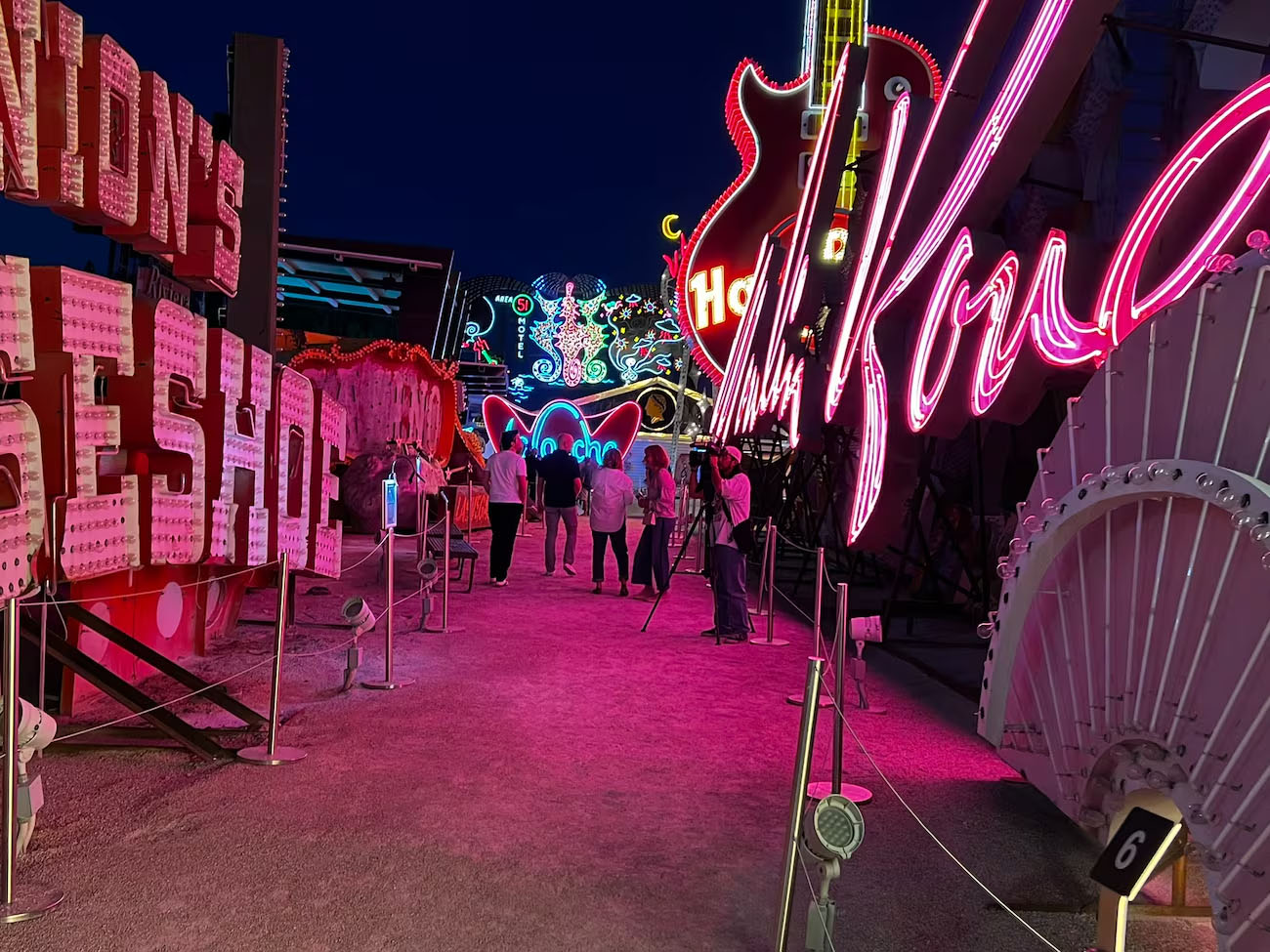
Two of the best museums in the Southwest are in Downtown Las Vegas, a few blocks from each other. The Mob Museum fills a 1933 federal courthouse with three floors on organised crime and the people who chased it, and its basement speakeasy is a genuinely good bar. The Neon Museum keeps 250-plus salvaged casino signs in an outdoor boneyard and is best seen at night when the restored ones are lit.
Beyond those, the National Atomic Testing Museum near the Convention Center explains the mushroom-cloud era with real artefacts, and the Pinball Hall of Fame on Las Vegas Boulevard South near the airport is a warehouse of playable machines where a few dollars in quarters buys an hour of nostalgia. Our full museums guide ranks them all by time needed and distance from the Strip. Plan museums for the hottest hours of the day; they are air-conditioned and rarely crowded before noon.
Desert, canyons and big-scenery day trips
The single strongest argument for a non-gambling trip is what surrounds the city. Red Rock Canyon is a 30-minute drive west with a 13-mile scenic loop and short hikes, and a car-load enters for a modest per-vehicle fee. Hoover Dam is 45 minutes southeast and pairs well with lunch in Boulder City. Valley of Fire, an hour northeast, has the most vivid sandstone in Nevada and is at its best from October to April.
Bigger days include the Grand Canyon by coach or helicopter, Zion National Park at roughly 2.5 hours and Death Valley in winter. If you only have a rental for one day, our day trips guide ranks them by reward for effort. In summer, do any desert outing at dawn: trails at Valley of Fire close in extreme heat and Red Rock parking fills by mid-morning on weekends.
Shows, food and the Strip after dark
Non-gamblers should spend the savings on the two things Las Vegas does better than any other US city: live shows and restaurants. Cirque du Soleil alone runs several permanent productions, there are headline residencies, magic and comedy every night, and free spectacles like the Bellagio Fountains fire every 15 to 30 minutes. The Shows & Nightlife hub covers what to book and what to skip, and same-day discount booths can cut ticket prices for shows that have not sold out.
For food, the range runs from a Chinatown noodle bar on Spring Mountain Road to a tasting menu with a fountain view, and the Dining hub has the buffets, steakhouses, cheap eats and happy hours sorted. A useful rhythm for a non-gambling evening: an early dinner off the Strip, a show at 7 or 9:30, then a slow walk past the fountains and the Strip's lobbies, which are free and at their best late.
Pools, spas, golf and getting active
From March to October the resort pools are an attraction in themselves, and most are included with your room: multi-acre lazy rivers at Mandalay Bay, a wave pool, adults-only decks and cabanas that cost real money on weekends. If you are not staying at a pool you like, some resorts sell day passes, usually in the tens of dollars on weekdays (as of 2026, check the resort). The Hotels & Resorts hub compares pools by property.
Spas at the larger resorts sell day passes to their thermal suites without a treatment, which is one of the better-value indoor escapes on a hot afternoon. Golf ranges from municipal courses in Henderson to high-end resort courses; expect a wide price spread and book early for cool-season weekends. There is also indoor skydiving, indoor rock climbing, a ropes course at Circus Circus, kart racing off the south Strip and multiple shooting ranges that cater to tourists, all priced per session rather than per day.
Building days around it: three sample plans
The culture day: Mob Museum at opening, lunch on Fremont East, Neon Museum at dusk, then the Fremont Street canopy shows. Everything is within a 15-minute walk or a short rideshare, and you spend the hottest hours indoors.
The desert day: Red Rock scenic loop at 7 a.m., a short hike at Calico Tanks before the heat, back to your pool by 1 p.m., then Sphere or a show in the evening. If you have a car for a second day, swap in Hoover Dam and Boulder City.
The Strip-only day (no car): Conservatory and a late breakfast at Bellagio, Shark Reef at Mandalay Bay via the free tram, AREA15 by rideshare mid-afternoon, dinner and the High Roller at sunset. Use the Transportation hub for the trams, monorail and Deuce bus that stitch these together, and see the itineraries for full multi-day versions.
Mistakes non-gamblers make
The biggest one is booking a room on the Strip and then complaining about walking through casinos. It is unavoidable; choose a resort whose layout you like or stay off-Strip and accept a rideshare. The second is underestimating distances: two resorts that look adjacent can be a 20-minute walk apart, and "just crossing the street" often means a pedestrian bridge and an escalator through a shopping arcade.
Do not buy a bundle of attraction tickets on arrival before you know what you will use; the multi-attraction passes only pay off if you visit four or five things in a few days. Do not schedule outdoor attractions after 10 a.m. in July. And do not assume "free" means free: the free drinks, free parking and comped meals exist to keep gamblers gambling. As a non-gambler you will pay resort fees and parking like everyone else, so check our budget guide for where the real savings are.


