
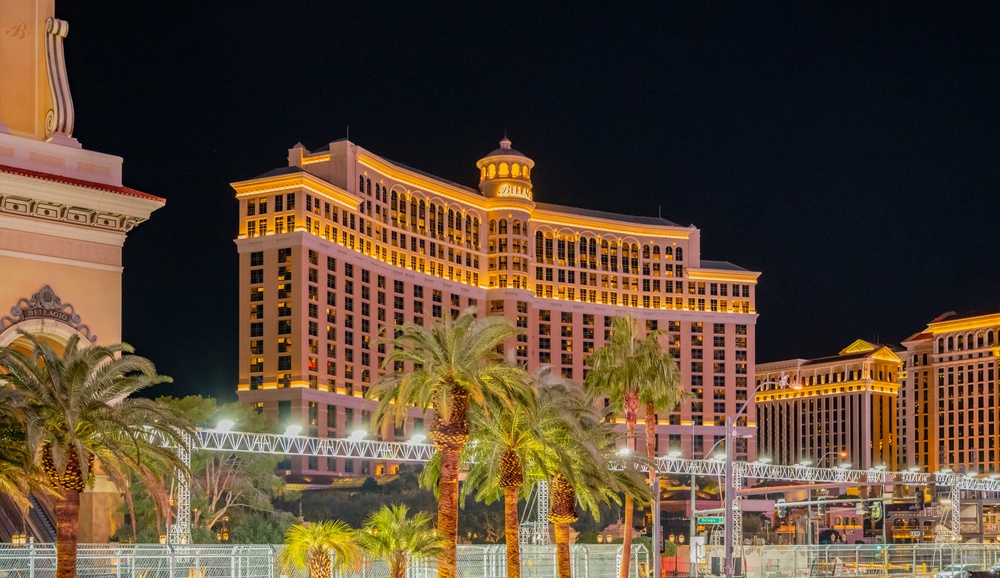
How the Las Vegas restaurant scene actually works
Las Vegas feeds roughly 40 million visitors a year, and almost all of that eating happens inside casino resorts. That single fact explains most of what feels strange about dining here. Restaurants are tenants of the resort, so they keep resort hours (late, seven days a week), price for a captive audience (a $9 coffee is normal on the Strip) and are laid out to be walked past on the way to the casino floor. The upside is density: inside a single building like Caesars Palace, The Venetian or ARIA you can choose between a celebrity steakhouse, a Japanese omakase counter, a noodle bar and a 24-hour café without going outdoors.
The second thing to understand is that there are really three separate food cities here. The Strip is the expensive one, with the biggest names and the highest prices. Downtown and the Arts District is the chef-driven, independent one, where a great dinner costs half as much. And the neighbourhoods — Chinatown on Spring Mountain Road above all — are where the two million residents eat, and where value is best. A good trip touches all three.
Price tiers: what a meal costs in 2026
Ranges below are per person before drinks, tax and tip, as of 2026 — always check the restaurant's own site or menu before you commit.
- Quick bites and food halls: $12–25. Block 16, Proper Eats, Famous Foods and casino food courts. See food halls and quick bites.
- Casual sit-down and casino cafés: $20–45. Burgers, tacos, diner plates, most of Chinatown.
- Buffets: roughly $40–90 depending on the property and meal period; weekend brunch at the top tier can pass $100 with drinks. See best buffets.
- Mid-range Strip dinner: $60–120. Most celebrity-chef restaurants, Italian, sushi and modern American.
- Steakhouses: $110–200. Steaks alone commonly run $65–150 and sides are extra. See best steakhouses.
- Tasting-menu fine dining: $250–500-plus before wine. See fine dining.
Add roughly 8.4% sales tax and a 20% tip and a $100 menu becomes $130 at the table. Some resorts also add a mandatory service or concession fee; it is printed at the bottom of the menu, so read it.
Reservations: when you need them and how to get them
For any well-known Strip restaurant on a Friday or Saturday, assume you need a reservation and that the good times (7–9pm) go first. Most resorts release tables 30 to 60 days out through OpenTable, Resy or SevenRooms; a handful of the hardest tables — Carbone, é by José Andrés, Hell's Kitchen prime times — book out within hours of release. Set a calendar reminder for the release date and book the moment the window opens.
Tactics that reliably work: eat early (5–6pm) or late (after 9:30pm) when availability is far better; take a bar or counter seat, which most restaurants keep unreserved; ask your hotel concierge, who often has held inventory for guests; and check at 10am on the day itself, when cancellation fees kick in and no-shows release tables. Weeknights are dramatically easier than weekends, and Sunday to Wednesday you can usually walk into all but the top ten.
For buffets, reservations are increasingly the norm at the premium properties and a line-skip pass is often sold for $20–30 extra. Downtown and Chinatown are mostly walk-in, with a wait on weekend evenings.
Where locals actually eat
Ask anyone who lives here where to eat and they will not say the Strip. They will say Spring Mountain Road — Chinatown — for ramen, hot pot, Thai and Korean barbecue; the Arts District along Main Street for chef-owned places like Esther's Kitchen; and the neighbourhood casinos (Red Rock in Summerlin, Green Valley Ranch in Henderson, South Point) whose cafés and steakhouses are half the Strip price. The 24-hour café at a locals casino is a genuine Las Vegas institution: a $15 steak-and-eggs at 3am, no queue, free parking.
Two rules of thumb. First, the further from Las Vegas Boulevard, the better the value; a $12 rideshare each way is almost always paid back by the bill. Second, the strip mall is not a warning sign here — it is where the best restaurants are. See off-Strip local favourites and downtown dining.
Tipping, fees and the small print
Tipping culture in Las Vegas is American and then some, because so much of the workforce is tipped. The norms: 18–22% at sit-down restaurants, $1–2 per drink or 20% at bars, 10–15% at buffets (the servers clear plates and bring drinks), and a few dollars for a host who finds you a table on a busy night. Many restaurants add an automatic gratuity of 18–20% for parties of six or more — check the bill before adding another tip on top.
Look out for line items that are not tips: a few resorts add a "concession and franchise fee" or "CNF" of around 4–5% to restaurant bills, and some venues charge a surcharge for splitting cheques. None of these go to your server. Menus must disclose them, usually in small print at the bottom, and the honest ones show prices inclusive.
Tap water is free and safe; ask for it specifically or you may be sold a $10 bottle. Corkage at fine-dining restaurants typically runs $50–100 per bottle.
Dress codes, kids, hours and other practicalities
Dress codes are lighter than the photos suggest. Fine-dining rooms like Joël Robuchon and Guy Savoy ask for jackets or "business elegant"; most steakhouses and celebrity restaurants want smart casual (no tank tops, swimwear or athletic shorts at dinner). Buffets, food halls and everything downtown are come-as-you-are.
Kids are welcome at almost every restaurant, including buffets and most steakhouses; the exceptions are lounge-style rooms and anywhere attached to a nightclub after 9pm. High chairs are standard.
Hours: Strip restaurants typically serve dinner 5–10:30pm, later on weekends; casino cafés and food halls run late or 24 hours; downtown kitchens close earlier, often by 10pm. Chinatown is the place for a proper meal after midnight.
Getting around: distances inside resorts are deceptive. Allow 15–20 minutes to walk from a hotel room to a restaurant in the same building, and 30-plus to a neighbouring resort. See transportation for the tram and monorail links that save time.
Planning meals around a trip
The best-fed visitors book one or two anchor dinners in advance — a steakhouse, a celebrity room, a tasting menu — and leave the rest loose. A workable pattern for a long weekend: a big buffet brunch the morning after a late night (they run until early afternoon), a Chinatown or Arts District dinner on the quiet night, a splurge dinner before a show, and happy hour every day at 4pm. A ninety-minute dinner before an 8pm show means a 6pm reservation and a restaurant in the same resort as the theatre; do not try to cross the Strip in between.
Start with our shortlist of the best restaurants, then work through the guides below. For show timing, see shows and nightlife; for a budget approach, see Las Vegas on a budget.


