
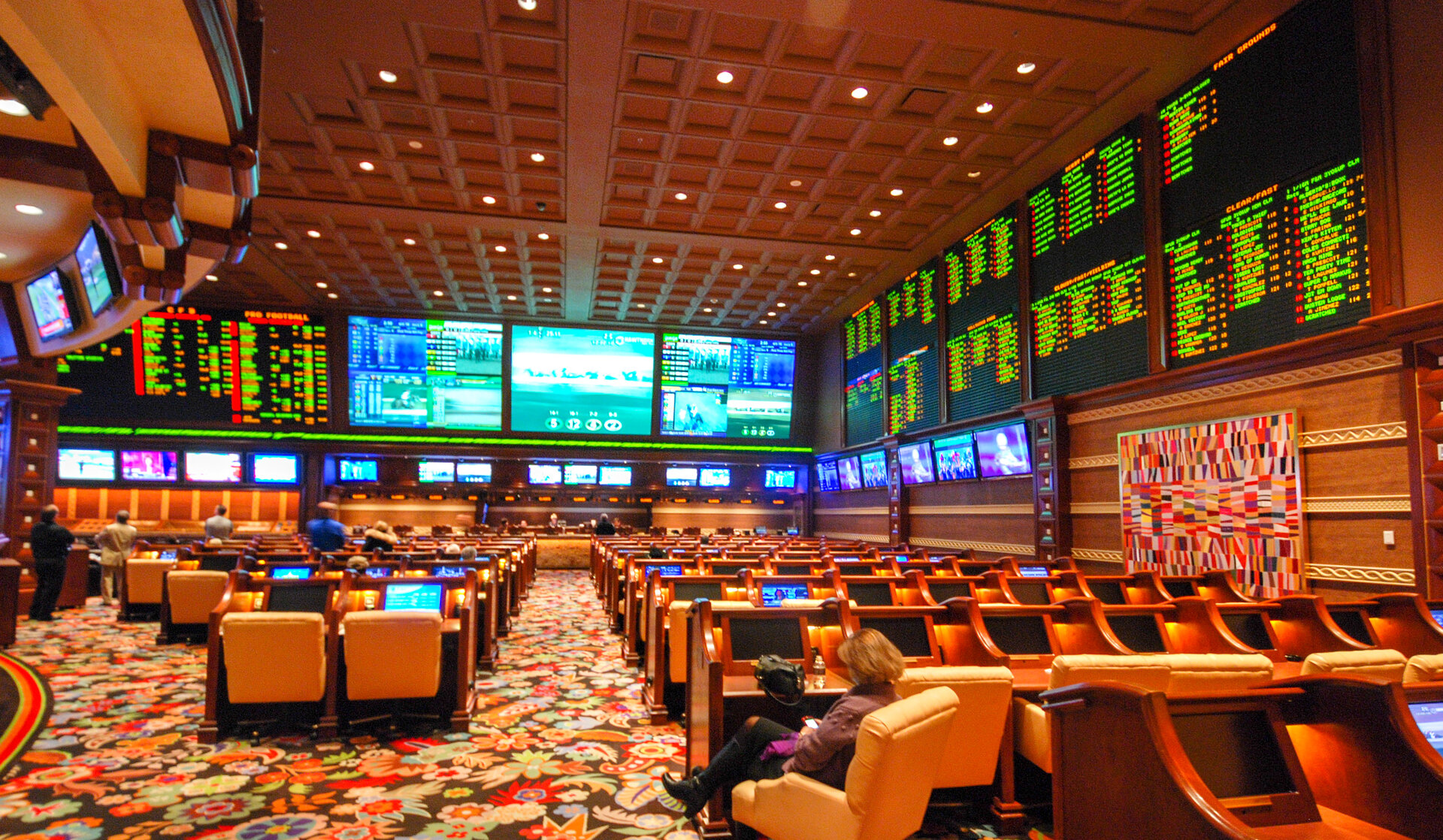
The layout and the rules of the floor
Every Las Vegas casino floor is the same at heart: a sea of slot machines, islands of table games in the middle (blackjack, craps, roulette, baccarat and a few others), a poker room off to one side, a sportsbook and a cashier's cage where chips become cash. You must be 21 to gamble or to linger at a table, and ID is checked for anyone who looks young. Children may walk through with an adult but may not stop. Smoking is permitted on most floors, drinks are served free to people playing, and there are no clocks and few windows by design.
This page is for people who have never sat at a table. It covers the mechanics and the manners. It does not offer strategy, because the honest summary of every casino game is the same: the house has a built-in edge, the games are entertainment with a price, and the only reliable way to control the cost is to decide it in advance.
Table minimums and where they are lowest
Every table has a small placard showing the minimum and maximum bet. On the Strip as of 2026, blackjack minimums at the major resorts run $15–$25 in the daytime and $25–$50 or more on weekend evenings; roulette and craps are similar. Downtown — the Fremont Street casinos, the El Cortez, the California — and the locals' casinos off the Strip (Station Casinos, Boyd properties) routinely offer $5–$10 tables, which is where beginners should start. On the Strip itself, the older or mid-range resorts (Excalibur, Flamingo, Horseshoe, the Sahara, Circus Circus) tend to have the lowest minimums, and mornings and weekday afternoons are cheaper than nights everywhere.
Sit down only at a table whose minimum you are comfortable losing several times in a row; a $25 table can take $200 in ten minutes. Electronic table games — a video dealer with individual terminals — offer $1–$5 minimums and are a low-pressure way to learn the mechanics before a live table. The downtown scene is covered in our Strip and Downtown guide.
Buying in, chips and cashing out
You do not hand money to the dealer. Wait for a break between hands, place your cash on the table (not in the dealer's hand), and they will count it in view of the camera and push you chips of the table's denominations. Say the amount out loud if you like; "$100 in" is standard. Keep your chips in front of you and your bets in the marked betting area. When you leave, ask the dealer to "colour up" — they exchange your small chips for larger ones — then take them to the cage to convert back to cash. Chips from one casino group are generally only cashable at that group's properties, so do not leave with a pocketful.
ATMs on the floor charge $8–$12 a withdrawal. Bring what you plan to play with in cash and leave the cards in the room; that is the single most effective budgeting device in the building.
The players card
Every casino group has a free loyalty programme — MGM Rewards, Caesars Rewards, Wynn Rewards, Boyd Rewards, Station Casinos' Boarding Pass, Circa's One — and the card is worth having even if you barely gamble. Sign up at the desk or in the app with ID, insert the card in any slot machine or hand it to the dealer when you sit at a table, and your play earns points and tracks "theo" — the house's theoretical win from your play — which is what comps are based on. Points convert to free play, meals and, at volume, rooms and show tickets. New members often get a sign-up bonus of free play or a dining credit, and members get discounts on parking, shows and hotel rates that have nothing to do with gambling.
Two cautions: the card tracks losses as well as play, and the marketing that follows is relentless. Also, using the card does not change the odds at all; it only records what you already did. See cheap show tickets for how the show perks work.
Etiquette at the tables
- Ask before sitting at a table with players mid-hand; wait for the shuffle at blackjack, and never join a craps table mid-roll without being waved in.
- Hand signals at blackjack: tap the table to hit, wave your hand flat to stand. The camera needs to see it; do not say it.
- Do not touch your bet once the hand starts, and in games dealt face-up, do not touch the cards at all.
- Keep drinks off the felt — use the cup holders.
- Phones away at the table; most casinos prohibit using them during play.
- Do not advise other players. It is their money.
- Dealers cannot give you odds advice but will happily explain the rules; ask when the table is quiet.
- Craps and roulette have their own vocabulary; watch a few rounds first, or ask the dealer to explain the basic bets. Most casinos run free gaming lessons in the morning — ask at the desk.
Drinks and tipping
Cocktail servers circulate the floor and drinks are free to anyone actively playing, which in practice means a bet on the table or a card in a machine. Tip the server $1–$2 per drink, in cash or a $1 chip. Service is slower on busy nights and at low-minimum tables, and some resorts now use drink-monitoring systems on slot machines that require a minimum play rate; it is not personal.
Dealers are tipped ("toked") either by handing a chip across or, better, by placing a small bet for them alongside yours — at blackjack, a chip in front of your bet. There is no set amount; a few dollars an hour of play, or a chip on a good hand, is normal. Nobody is offended if you do not tip when losing. Slot attendants get a tip on a hand-paid jackpot, typically a percentage of it. The cashier at the cage does not expect one.
Setting a limit and keeping the fun in it
Decide a total gambling budget for the trip before you arrive — an amount you are entirely comfortable never seeing again — and split it into daily sessions. Bring each session's cash, leave the cards behind, and when it is gone, the session is over; do the show, the pool, the bar. Wins are for taking off the table, not for extending the session. Never chase losses, never gamble to pay for something else, never gamble tired or drunk, and treat the games as what they are: entertainment with a price, like a show ticket. If it stops being fun, stop.
Every Las Vegas casino posts the Nevada problem-gambling helpline (1-800-522-4700) and offers self-exclusion on request. For the rest of the evening beyond the floor, the shows and nightlife hub has plenty that costs less; Las Vegas on a budget shows how much of the city needs no gambling money at all; and if the sportsbook is what draws you, our sportsbooks guide covers that room.