
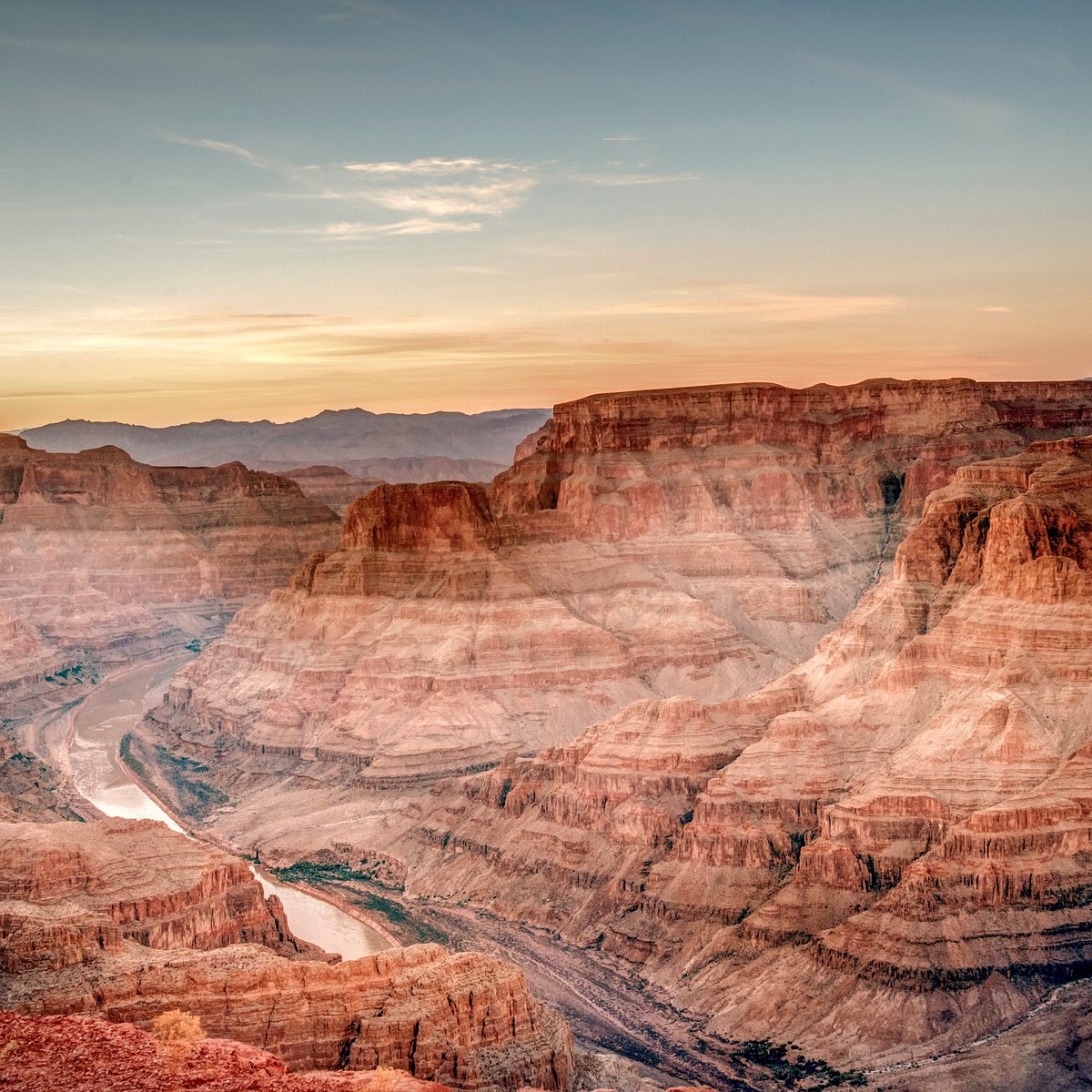
Why this is the hardest day trip on the list — and still worth it
Antelope Canyon is a pair of slot canyons on Navajo Nation land just outside Page, Arizona, where flash floods have carved Navajo sandstone into flowing corridors a few feet wide and 120 feet deep, lit from above in bands of orange and purple. Horseshoe Bend, ten minutes away, is a 1,000-foot cliff above a perfect meander of the Colorado River. Together they are two of the most photographed landscapes in the Southwest. The problem is geography: Page is about 275 miles from the Strip, four and a half to five hours each way through Utah and northern Arizona, which makes a day trip 13 to 15 hours long.
It can be done, and thousands of people do it every year on organised tours. But it is a long, mostly sedentary day for about three hours of actual sightseeing, and the light in the canyon — the reason you are going — is best in a narrow midday window. This guide lays out the honest version of both options: the marathon day trip, and the overnight that most people who have done both recommend.
Navajo-guided tours are required: how the canyon works
You cannot walk into Antelope Canyon on your own. Both sections are Navajo Tribal Park land, and access is only with a licensed Navajo guide on a scheduled tour, booked in advance through one of the family-run operators authorised by the Navajo Parks and Recreation Department. There are two canyons with separate operators and separate bookings. Upper Antelope Canyon is the famous one: a flat, easy walk through a cathedral-like corridor where, around midday from roughly late March to early October, shafts of sunlight beam down to the sand. Lower Antelope Canyon is narrower, longer and involves stairs and ladders; it is less crowded, brighter and, many photographers think, more beautiful.
Tours last 60 to 90 minutes and as of 2026 run roughly $90–$150 per person for standard slots, more for prime midday times and photography-specific tours, plus a Navajo park permit fee of a few dollars usually included in the price; check the operators' sites for current rates and rules, which change year to year. Book weeks or months ahead for spring and summer — the light-beam slots sell out first. Tripods, bags and monopods are generally not permitted on standard tours, and the canyons close without warning when rain threatens anywhere upstream, because flash floods here have killed visitors. Tour times are on Arizona time, which does not observe daylight saving — an easy way to miss a booking.
Horseshoe Bend, Lake Powell and what else fills the time
Horseshoe Bend is simpler: a paved trail of about 1.5 miles round trip from a car park on US-89 south of Page, run by the city with a per-vehicle parking fee of roughly $10 as of 2026. The rim is mostly unfenced; a small railed viewing platform exists but most people walk the edge. Sunrise and late afternoon give the best light, with the river a deep green and the walls glowing; midday is flat and crowded, though it is when day tours arrive. Allow an hour, and wear shoes — the sand is hot and the last stretch is exposed.
Also in and around Page: Glen Canyon Dam and its visitor centre (free, with a bridge viewpoint), Lake Powell and the Wahweap marina for boat tours to Rainbow Bridge or a sunset cruise, the Hanging Garden and Toadstool short trails, and, with more time, the Navajo Bridge over Marble Canyon on the way to the Grand Canyon's South Rim. Page itself is a functional town with chain hotels, a few good local restaurants and the Navajo-owned restaurants that serve fry bread and mutton stew worth trying.
The day-trip version: how tours make it work
Coach and small-group tours from the Strip leave around 5 or 6 a.m., drive up I-15 and through Utah's Dixie corridor and Kanab, reach Page late morning, do a guided canyon tour (usually Upper, sometimes Lower), stop at Horseshoe Bend, and drive back through the evening to arrive on the Strip between 9 and 11 p.m. As of 2026 they run roughly $250–$450 per person including the canyon tour, permits and transport, often with lunch; check operators for current rates. Air options exist too: small-plane tours from Las Vegas fly to Page in about 90 minutes, tour the canyon and Horseshoe Bend by van and fly back, cutting the day to eight or nine hours at roughly $500–$800 per person; see our scenic flights page.
Self-driving as a day trip is possible but not recommended: nine to ten hours behind the wheel, a fixed canyon booking you cannot be late for, and the Utah–Arizona time zones to juggle. If you are driving, make it an overnight. The coach tour is the sane way to do the single day — someone else drives and worries about the timing, and you sleep on the way back.
The overnight version: better light, better trip
With a night in Page, the trip becomes one of the best two-day excursions from Las Vegas. Day one: leave the Strip mid-morning, stop in St. George or Kanab, arrive Page mid-afternoon, Horseshoe Bend at sunset. Day two: Lower Antelope Canyon in the morning (bright and less crowded) or Upper at midday for the beams, Glen Canyon Dam or a Lake Powell boat tour, then the drive home — or onward. Hotels in Page run roughly $120–$300 a night in season as of 2026, higher in summer; there are also motels in Kanab, 75 miles west, if Page is full.
The drive itself is worth the trip: I-15 through the Virgin River Gorge, then UT-9 and UT-59 or US-89 past Zion's eastern edge, the Vermilion Cliffs and the Coral Pink Sand Dunes. You can even go through Zion on the Mount Carmel Highway (the tunnel and switchbacks) for a small detour. A two-night version returns via the Grand Canyon South Rim and Route 66 to Kingman, which our Las Vegas and Grand Canyon itinerary lays out day by day.
Best season and the light-beam question
The sunbeams in Upper Antelope Canyon appear only when the sun is high, roughly from late March to early October, and only around late morning to early afternoon; outside that window the canyon is still gorgeous but lit indirectly, in softer purples and reds. Summer is peak season for beams and crowds alike, with tours running back to back and afternoon monsoon storms from July to September that close the canyons at short notice. Spring and autumn are the best compromise: mild weather, workable light and slightly fewer people. Winter is cold, quiet, cheap and beam-free, and Lower Antelope is arguably at its best then.
Horseshoe Bend does not care about season; it cares about the time of day. Sunrise has the fewest people, sunset the best colour. For Lake Powell boating, May to October. Whatever the month, check the weather upstream, not just in Page — a storm 50 miles away is what closes the canyon. Our best time to visit guide covers the months from the Las Vegas end.
Costs, time needed and what to pack
Budget for the two-day self-drive: fuel for a 550-mile round trip, one hotel night, the canyon tour ($90–$150 per person), Horseshoe Bend parking ($10 per car), food, and optionally a Lake Powell boat tour ($50–$150). For two people it lands roughly in the $400–$700 range as of 2026, comparable per person to the coach day trip but with twice the experience; check every operator for current prices. The day-trip coach is $250–$450 per person all-in. Glen Canyon National Recreation Area charges an entry fee only if you enter the Wahweap area, roughly $30 per vehicle.
Pack a light, no-bag approach for the canyon (phones and cameras only, and a strap for them — sand gets everywhere), closed shoes with grip for Lower Canyon's ladders, plenty of water, sun protection, a warm layer for early Horseshoe Bend visits, a printed copy of the canyon booking with its Arizona time noted, and, if you are driving, downloaded maps and a full tank from Kanab or Page. The general packing list covers the rest.
Combining with Zion, Bryce and the Grand Canyon
Page is the hinge of a Southwest loop. From Las Vegas, the classic circuit is Zion (one night in Springdale), Bryce Canyon (a half day or a night), Page for Antelope Canyon and Horseshoe Bend (one night), the Grand Canyon South Rim via the Navajo Bridge and the Desert View entrance (one night), and back to Las Vegas via Williams, Route 66 and Hoover Dam. That is four or five days and roughly 1,000 miles, and it is one of the great American road trips. Each park has its own page: Zion, Bryce and the Grand Canyon.
For shorter combinations, Antelope Canyon pairs best with the Grand Canyon South Rim (two and a half hours further) or with Zion on the way home. It does not pair with anything else on a single day from Las Vegas, and no tour that promises Antelope Canyon plus the Grand Canyon in one day from the Strip is giving you enough time at either.


