
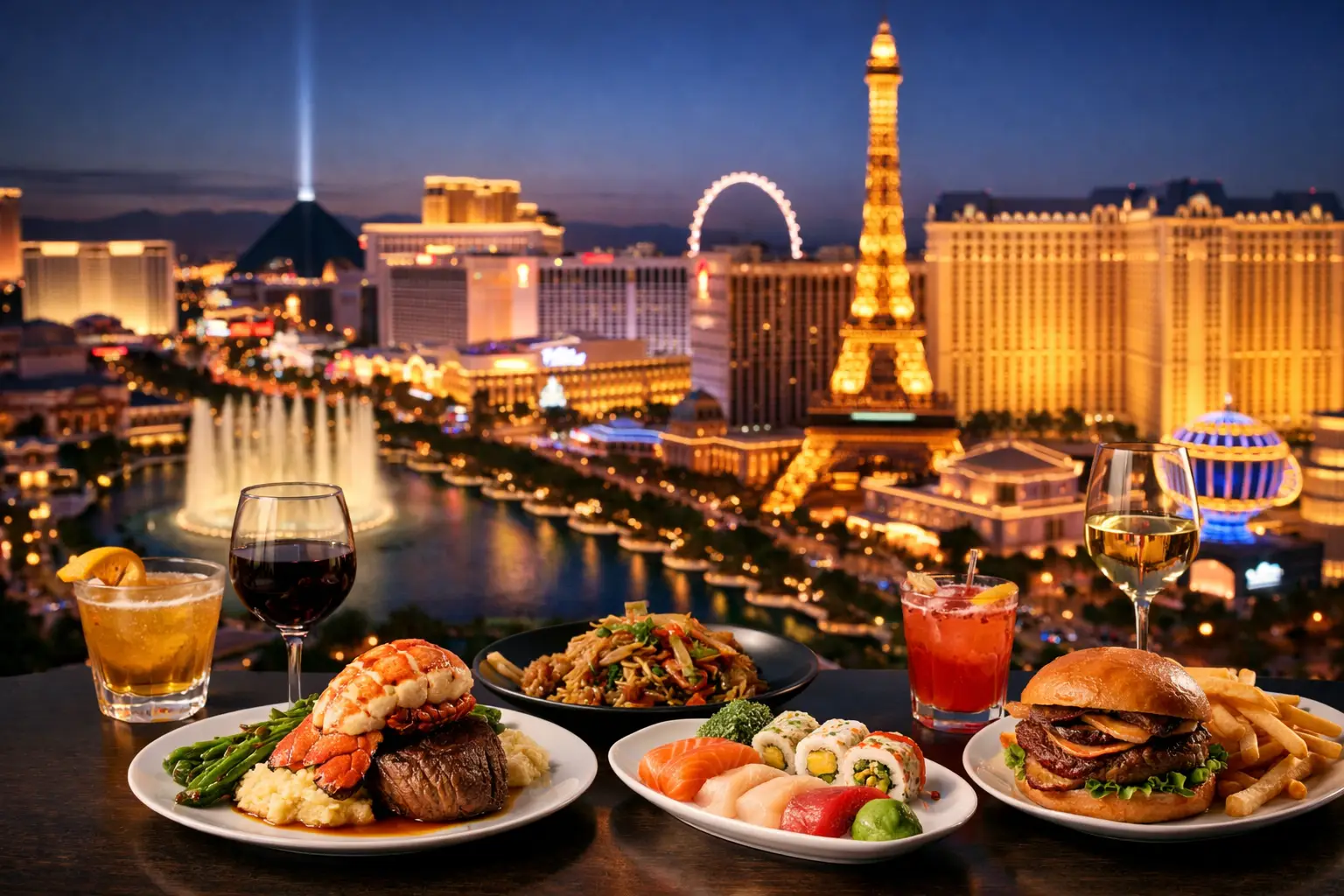
A Las Vegas restaurant can be the highlight of a trip, or a two-hour detour that leaves you late for a show and $300 lighter than planned. Las Vegas dining rewards a little strategy because the city’s best meals are spread across massive resorts, off-Strip neighborhoods, Downtown, and a few places that require a car or rideshare. The right choice is less about chasing the most famous name and more about matching the meal to your schedule, budget, and hotel location.
For most visitors, the biggest mistake is treating every dinner as a headline event. Save that energy for one or two meals that matter, then build the rest of the trip around convenience. Las Vegas is large, restaurants book up, and a reservation on the wrong end of the Strip has a real cost in travel time.
Start With Your Trip, Not the Restaurant List
A first Vegas visit usually calls for one iconic meal in a major resort. It is part of the experience: a polished dining room, recognizable chef, excellent service, and a setting that feels tied to the city. Think of this as an occasion meal, not the default for every night. The bill can climb quickly once cocktails, wine, tax, and gratuity enter the picture.
Couples on a celebratory escape can justify a view, tasting menu, or high-end steakhouse, particularly if dinner replaces a second expensive nightlife plan. A friend group may get more value from a lively shared-plates restaurant where everyone can order broadly without committing to a formal multi-course evening. Families generally do better with familiar menus, earlier reservation times, and restaurants inside or close to their hotel. Crossing the Strip with tired kids just for a trendy reservation rarely pays off.
Nightlife-focused groups should also be honest about timing. A 9:30 p.m. dinner sounds glamorous until it pushes club entry close to midnight. In that case, reserve an early dinner near the evening’s main destination or make a substantial late lunch your big meal. What changes the plan is not the restaurant’s rating. It is where you need to be afterward.
Las Vegas Dining by Area
Central Strip: Best for first visits and packed itineraries
The central Strip, roughly around Bellagio, Caesars Palace, Paris Las Vegas, The Cosmopolitan, and ARIA, offers the deepest concentration of recognizable restaurants. It is the best place to book a special dinner if you are seeing a nearby show, spending the evening in a casino, or visiting Las Vegas for the first time.
The trade-off is price and crowds. These restaurants often carry premium resort pricing, and prime tables around 7 to 9 p.m. can be difficult to secure on Friday and Saturday. If your schedule is flexible, a 5:30 or 6 p.m. reservation can be easier to get and puts you ahead of show traffic.
Central Strip is also where people overestimate walkability. Resorts look adjacent on a map but may be separated by pedestrian bridges, escalators, casino floors, and long interior corridors. A restaurant “at Caesars” is not automatically convenient from every room at Caesars Palace, let alone from a neighboring property. Check the actual resort and allow more time than you think.
South Strip: Best for convenience near your hotel
Mandalay Bay, Luxor, Excalibur, MGM Grand, New York-New York, Park MGM, and nearby resorts give south-Strip guests plenty of dining choices without a cross-town trip. This is especially useful for travelers attending an event at Allegiant Stadium, seeing a show around Park MGM, or staying at MGM Grand.
Park MGM is one of the more useful dining hubs for visitors who want quality without the most formal Strip experience. The area works well for groups because there are options across price points and a straightforward connection to adjacent properties. Mandalay Bay is a strong choice for resort guests, but its distance from the center of the Strip means outside reservations should be chosen carefully.
If you are staying at the far south end, do not book every dinner at Bellagio or Wynn. One central-Strip night is reasonable. Repeating that trip after a day of walking turns dinner into a transportation project.
North Strip: Best for luxury-focused stays
Wynn, Encore, Resorts World, Fontainebleau, and The Venetian/Palazzo area are especially strong for travelers building the trip around upscale resorts, polished cocktail bars, and serious dining. The restaurant quality is high, and the atmosphere generally suits adults-only weekends, business travelers extending a stay, and couples who want a more refined base.
The limitation is geography. North Strip hotels are farther from many central Strip shows and attractions than newcomers expect. Dining within your resort or nearby is often the smart move on show nights. Take a rideshare rather than gamble on a long walk in summer heat or after midnight.
Downtown and the Arts District: Best for a change of pace
Downtown Las Vegas and Fremont Street offer a different dining rhythm: more casual choices, a few destination restaurants, and better opportunities to step outside the resort bubble. It can be a good fit for value-minded travelers, repeat visitors, and anyone already planning a Fremont Street evening.
Do not go Downtown solely because you assume it will be cheap. Prices vary widely, and a rideshare from the Strip can erase modest menu savings. Go because you want the atmosphere, a specific restaurant, or a night centered on Fremont. The nearby Arts District is better for travelers who want independent restaurants, coffee, bars, and a less casino-driven setting, though it is easiest with a car or rideshare.
Decide Where the Splurge Actually Belongs
A Vegas splurge dinner is worth it when it creates an experience you cannot easily duplicate at home: a distinctive room, exceptional service, a celebrated chef’s flagship, a hard-to-get reservation, or a meal attached to a milestone. It is less compelling when you are paying luxury prices for a cuisine you eat regularly and do not care much about.
For a three-night trip, one major dinner is usually enough. Use another evening for a strong midrange restaurant near your plans, then keep one meal flexible for a food hall, casual counter, or room-service recovery night. That mix protects both your budget and your itinerary.
Steakhouses remain dependable for groups because menus are familiar, service is built for long dinners, and the setting fits Vegas. They are not always the best value. Seafood, Italian, Japanese, and modern American restaurants can deliver a more memorable meal at a similar price, depending on what your group actually enjoys. Do not choose steak by default just because it feels like the Vegas answer.
Reservations, Fees, and Timing
Reserve your priority dinners as soon as your travel dates are firm, especially for weekends, conventions, holiday periods, and major sports or concert events. A reservation does not always mean the final price is predictable. Review tasting-menu minimums, cancellation policies, special-event menus, and whether a large-party gratuity will be added automatically.
For popular restaurants, the best practical reservation time is often earlier than travelers want. A 5:30 to 6:30 p.m. table can mean better availability, a calmer room, and enough time for a show. Later slots work when dinner is the evening’s centerpiece, not a stop before tickets, a nightclub, or a timed attraction.
Lunch is where some of the savings actually are. Certain upscale restaurants offer a more approachable daytime menu, and you can enjoy the same setting without committing to a long, expensive dinner. It also frees up the evening for a show or spontaneous plans.
Do not overlook resort food courts, quick-service counters, and grocery options for breakfast and snacks. They are not glamorous, but they prevent the common Vegas pattern of spending $30 per person on a rushed morning meal and then arriving at dinner overly hungry. If your hotel has a refrigerator, simple drinks and breakfast items can trim the trip total without sacrificing a single great dinner.
Build Meals Around the Map
The easiest way to plan Las Vegas dining is to assign each major meal to the neighborhood you will already be visiting. Eat near your show. Book lunch near the pool or attraction on that day. Choose a restaurant within your own resort on arrival night, when delayed flights and check-in lines can derail ambitious plans.
Leave at least one dinner unbooked if you are visiting for more than two nights. That open slot is useful when a show runs late, a pool day turns into an all-day affair, or you find a restaurant nearby that fits the mood better than the plan you made weeks earlier. Vegas rewards structure, but it also rewards room to adjust.
The best table is not necessarily the most expensive or most photographed one. It is the one that gives you a memorable meal without stealing time from the rest of the trip you came to take.