
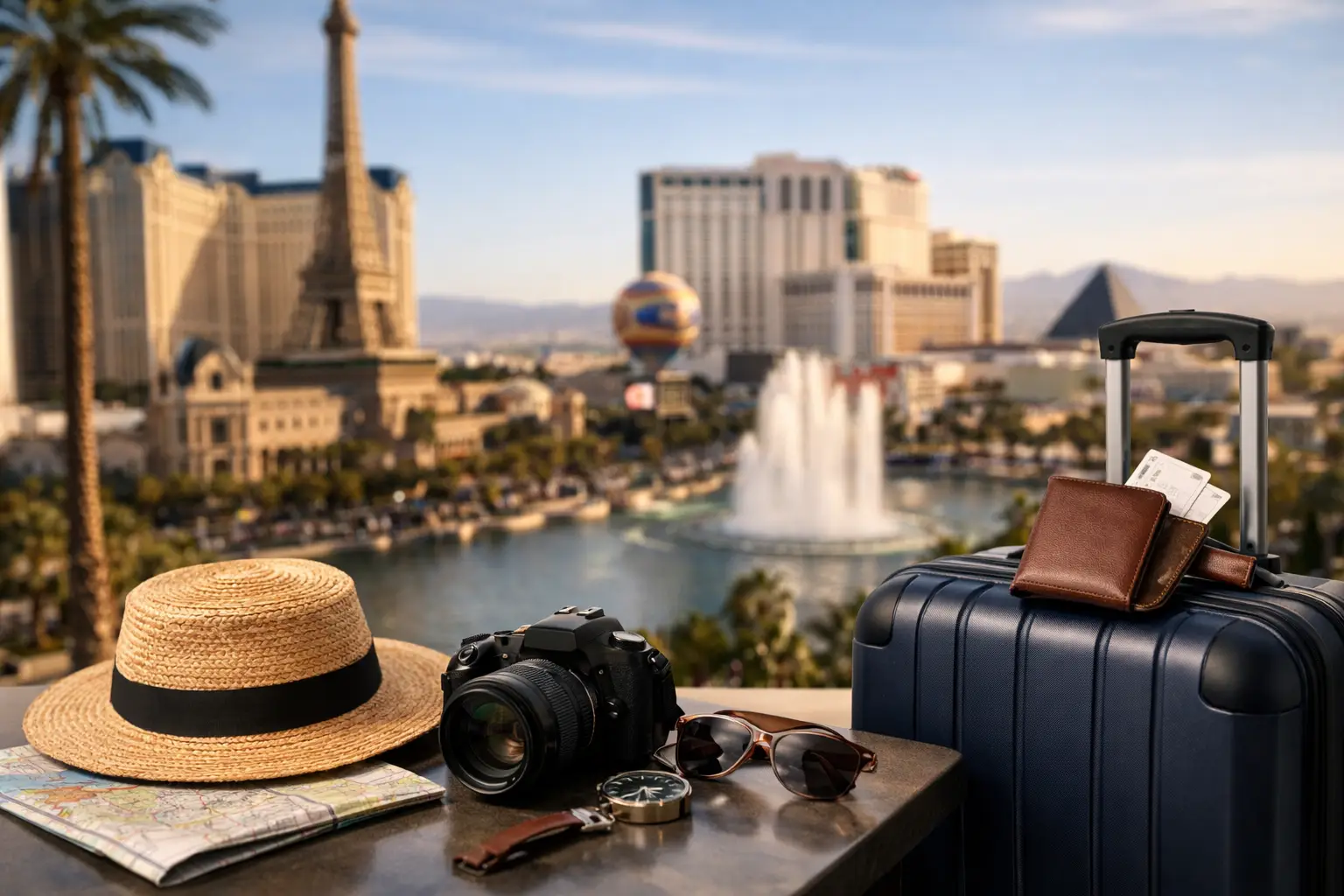
Las Vegas can turn a two-mile walk into an all-evening commitment, especially after a flight, a hotel check-in line, and a stop to admire every casino lobby. A good first time Las Vegas itinerary is not about seeing every resort. It is about choosing a few headline experiences, grouping them by location, and leaving enough space to enjoy the parts you did not plan.
For a first visit, three nights is the practical sweet spot. You get a full Strip day, one night for Downtown and Fremont Street, and a final day that can flex around a show, pool time, shopping, or a big meal. Stay on the Strip if this is your first trip. The savings from an off-Strip room can disappear quickly in rideshare costs and time spent commuting.
Build Your First Time Las Vegas Itinerary Around Geography
The Strip looks compact on a map, but the usable walking distance is larger than it appears. Casinos have long entrances, pedestrian bridges add detours, and summer heat changes what feels reasonable. Divide the Strip into three zones: the south end around Mandalay Bay, Luxor, Excalibur, Park MGM, and MGM Grand; the central Strip around Caesars Palace, Bellagio, Paris, Flamingo, The LINQ, and Venetian; and the north end around Resorts World, Fontainebleau, and Sahara.
For most first-time visitors, central Strip is the most forgiving base. You can walk to the Bellagio fountains, Caesars Palace, Paris Las Vegas, The LINQ Promenade, and several major show venues without using a car. It is usually more convenient than the south end, even when a south Strip hotel has a lower nightly rate.
Book one major ticketed event per night, not two. A residency, Cirque-style production, comedy show, concert, or sports event gives the evening structure. Add dinner before it and a casino, lounge, or nightclub afterward if you still have energy. Trying to fit a production show, a nightclub, and a late dinner into one night is how reservations become expensive no-shows.
Day 1: Check In, See the Central Strip, Go Out
Arrival day should be intentionally light. If your room is not ready, leave your bags with the bell desk and start nearby rather than crossing the Strip. This is also when you should confirm resort fees, pool hours, restaurant reservations, and show ticket instructions. Small details are easier to fix in the afternoon than 20 minutes before curtain.
Start your first evening at the Bellagio fountains. They are free, central, and worth seeing once, particularly after dark. From there, walk through Bellagio and cross toward Paris Las Vegas for the Strip views and restaurant options. The Paris area is a convenient place for dinner because it puts you close to Bellagio, Caesars Palace, Planet Hollywood, and the Cosmopolitan.
After dinner, pick one direction. Walk north through Caesars Palace and The LINQ Promenade if you want a busy, casual first-night atmosphere with bars and easy people-watching. Walk south toward the Cosmopolitan and Aria if you want a more polished cocktail-and-lounge night. Do not make the mistake of treating every casino as a destination. On night one, a short list is better than a tired march through slot machines.
If you want a rooftop view, schedule it around sunset only if you are willing to deal with crowds and reservation timing. The view is strong, but sunset slots tend to be the premium experience. A later drink can deliver much of the same skyline for less pressure and, sometimes, less money.
Day 2: Choose One Big Daytime Experience and One Show
Use your first full day for the Las Vegas experience that matters most to your group. For some travelers, that is a resort pool day. For others, it is a helicopter flight, a spa treatment, a shopping stop, a sports book, or a long lunch at a restaurant they have been eyeing for weeks. Do not stack all of those into one day. Las Vegas works better when you spend money on one memorable priority instead of rushing between five paid attractions.
If pool time is the priority, stay at your own resort unless you have a specific reason to buy access elsewhere. Resort pools can have different guest rules, seasonal schedules, cover charges, and cabana minimums. A cabana makes sense for a group that will spend most of the day there; it is poor value for two people who mainly want shade for an hour.
In the late afternoon, explore a resort cluster before dinner. The Venetian and Palazzo are a sensible choice if you want elaborate interiors, shopping, and a large selection of restaurants. The Park MGM, Aria, and Cosmopolitan cluster is better for modern dining and a relatively manageable walk between properties. Bellagio and Caesars Palace are the classic first-visit picks, but both can be crowded and their interiors are large. Build extra time into your plans.
Make this your show night. Reserve dinner near the venue, ideally within the same resort or a short walk away. A 7:00 p.m. dinner for a 9:30 p.m. show can be comfortable; a 7:45 p.m. reservation across the Strip can be risky once wait times and casino exits enter the picture. If tickets are costly, compare the seat map rather than automatically buying the cheapest section. In many Vegas theaters, extreme side seats and rear sections change the experience more than the advertised discount suggests.
After the show, decide whether nightlife is actually the goal. For a nightclub, buy tickets or join a guest list only after checking the artist, entry rules, dress expectations, and whether your group is comfortable arriving late. For a lower-commitment night, a lounge or casino bar gives you music and energy without the line, cover, and bottle-service pressure.
Day 3: See the South Strip, Then Go to Fremont Street
Use the final day to cover ground outside your central Strip bubble. Start at the south end with the Welcome to Fabulous Las Vegas sign if the photo matters to you. Go early. It is a short stop, but midday heat and rideshare congestion make it less appealing than it looks online.
From there, choose between Mandalay Bay and the Park MGM area. Mandalay Bay is worth the trip for its scale, beach-pool reputation, aquarium, and access to the south Strip, but it is not a quick walk from Bellagio or Caesars. Park MGM is more practical for a relaxed lunch, the Dolby Live venue, and access to nearby resorts without the sensory overload of some casino floors.
Take the afternoon slowly, then head Downtown after dark. Fremont Street Experience is not a substitute for the Strip. It is louder, more compact, more casual, and generally less polished. That contrast is exactly why it belongs on a first itinerary. You can see the canopy light show, hear live music, visit older casinos, and get a more concentrated version of classic Las Vegas in a few hours.
Rideshare is usually the simplest option between the Strip and Downtown, especially for first-time visitors. Pick up from the designated rideshare area, not the front entrance you assume is closest. Large resorts often route vehicles to a separate garage or side entrance, and walking to the wrong pickup point can cost 15 frustrating minutes. Taxis may be useful when a taxi stand is immediately available, while the Deuce bus is the budget option if time matters less than price.
At Fremont Street, keep valuables secure and set a clear meeting point if your group splits up. The area is heavily visited and fun, but it rewards basic city awareness. Eat before the late-night rush if you want a sit-down meal, or treat Downtown as your drinks-and-snacks stop and return to the Strip for a quieter final night.
What to Skip on a First Visit
Skip the temptation to reserve every meal weeks in advance. Lock in the one restaurant you would be disappointed to miss, plus any pre-show dinner with a narrow time window. Keep the rest flexible because flight delays, pool weather, casino traffic, and a great unexpected bar can change the day.
Also skip long walks simply because the map says they are possible. Use the monorail when it connects your hotel and destination, take a rideshare for cross-Strip jumps in heat or heels, and expect pedestrian bridges to add time. Transportation is not a failure of the Vegas experience. It is what protects your energy for it.
Your first trip does not need to prove that you saw all of Las Vegas. Pick the version of the city you came for, give it enough time, and leave a few reasons to come back.