
How the city is laid out
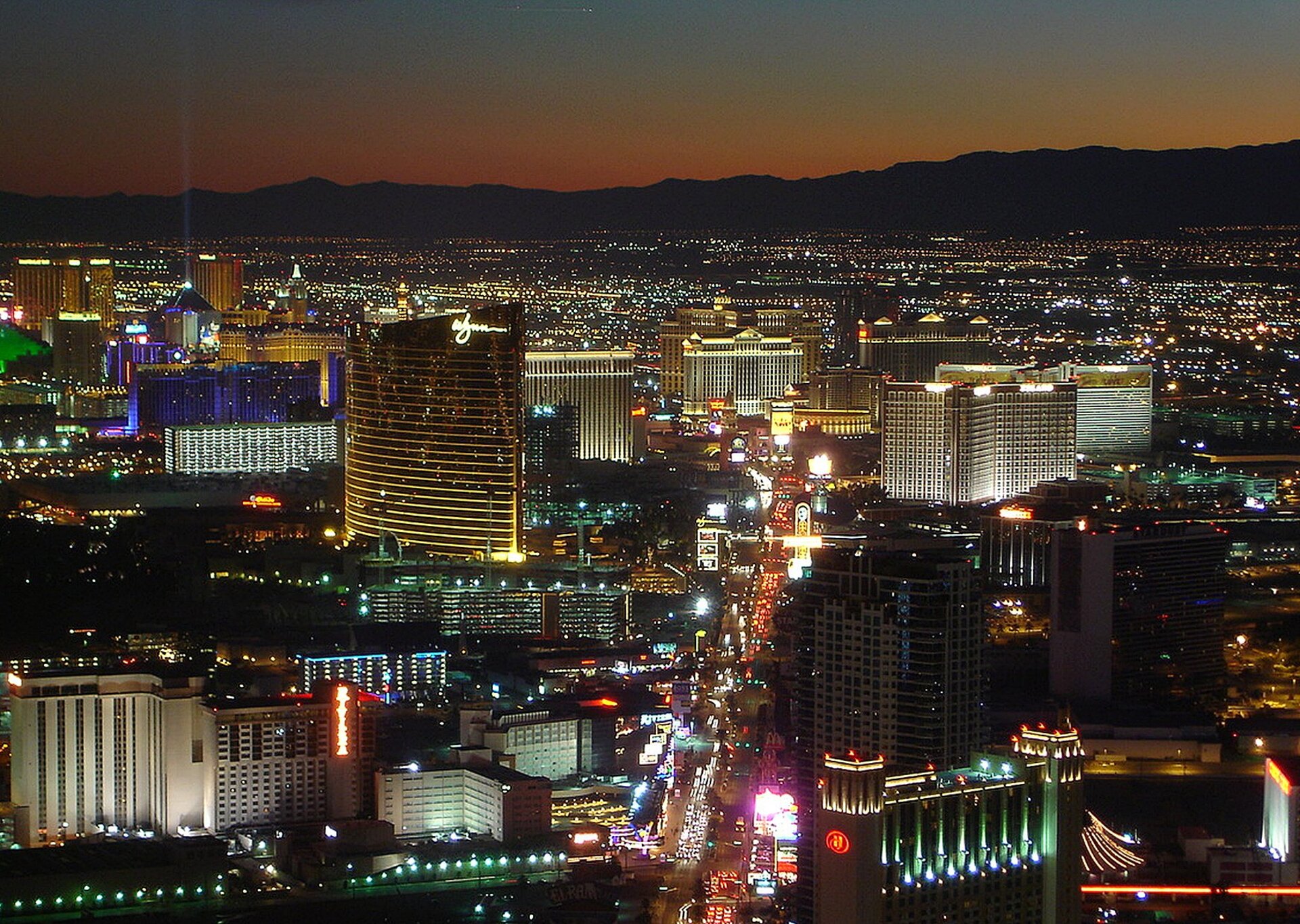
Almost everything a first-time visitor wants sits on one road. Las Vegas Boulevard, known to everyone as the Strip, runs roughly north to south for about four miles between Mandalay Bay at the south end and the Strat at the north. Downtown and Fremont Street sit a further two miles north of that, and the two areas feel like different cities: the Strip is mega-resorts and spectacle, Downtown is older casinos, cheaper drinks and a covered pedestrian street with a light show.
The Strip is usually split into three sections. The south Strip (Mandalay Bay, Luxor, Excalibur, MGM Grand, New York-New York) is closest to LAS. The center Strip (Bellagio, Caesars Palace, the Cosmopolitan, Paris, the LINQ) is where most first-timers should stay because the icons are within a fifteen-minute walk. The north Strip (Wynn, Encore, Resorts World, Fontainebleau) is quieter and further from everything else. Sphere sits just east of the center Strip behind the Venetian.
Our Strip guide breaks each section down resort by resort.
Distances are the first thing that catches people out
On a map the Strip looks compact. It is not. Walking from Mandalay Bay to the Wynn takes well over an hour without stopping, and every resort is built to keep you inside, so a walk "next door" can mean ten minutes of casino floor, escalators and pedestrian bridges before you reach the sidewalk. Two resorts that look adjacent can be twenty minutes apart on foot.
Plan each day around one section of the Strip, and use the free trams (Mandalay Bay to Excalibur, Bellagio to Park MGM, Mirage site to Treasure Island), the Deuce bus, the monorail on the east side or a rideshare when you change sections. In summer, walking more than a few blocks between 11am and 6pm is genuinely unpleasant, with pavement temperatures that can exceed 110°F. Our transportation guide covers every option and what each costs.
Choosing where to stay
For a first trip, stay on the center Strip or close to it. You will pay more per night than at the south end or Downtown, but you will save that money in rideshares and, more importantly, in time. Being able to walk to the Bellagio fountains, Caesars, the LINQ Promenade and the High Roller in a few minutes changes the whole trip.
Every Strip resort charges a resort fee on top of the room rate, typically $35–$55 per night plus tax as of 2026 (check the official site), and it is not optional. Always compare the total price including fees. Parking is also paid at most major resorts, usually $15–$25 a day for self-parking, so a rental car only makes sense if you are taking day trips.
If you are not sure what suits you, take our hotel picker quiz, or read the full hotels and resorts guide for a breakdown by budget and area.
What to book before you arrive
The biggest first-timer mistake is assuming you can sort everything out when you land. The best seats for Cirque du Soleil shows, any Sphere concert or residency, celebrity-chef restaurants on a weekend and the popular dayclubs are all booked out well in advance. Book these two to eight weeks ahead: your top-choice show, one or two dinner reservations, the Sphere Experience if you want a specific time and any Grand Canyon or Hoover Dam tour.
Things you can leave until you arrive: the High Roller, most buffets on weekdays, comedy and magic shows, casino lounges and anything from the same-day discount booths. Our tickets hub explains where to buy each type and how to avoid paying resale prices, and the trip planning checklist puts every task on a timeline.
Casino etiquette and gambling basics
You do not have to gamble, and most first-timers spend less time at the tables than they expected. If you do play, a few basics keep it fun. Table minimums on the Strip are usually $15–$25 on weekdays and rise to $25–$50 on weekend nights; Downtown and off-Strip casinos start lower. Slots accept cash or a ticket voucher; tables require you to place cash on the felt, not hand it to the dealer, and wait for chips.
Drinks are free while you are actively playing, and tipping the cocktail server $1–$2 per drink is expected. Tip dealers occasionally, either as a chip or by placing a bet for them. Do not touch your bet once cards are dealt, do not photograph the tables and do not hold a phone at the table while playing. Set a gambling budget before you sit down and treat it as the cost of entertainment, not an investment. Sign up for the resort loyalty program before you play; it is free and tracks play toward comps.
Eating well without going broke
Las Vegas dining runs from $6 tacos in Chinatown to $500 tasting menus, and a good first trip touches both ends. Book one serious dinner: a steakhouse or a celebrity-chef room on the center Strip. For the rest, lean on food halls, happy hours and the classic buffets, which are excellent for brunch on a weekday when the price is lowest.
Budget $60–$120 per person per day for food if you eat one nice meal and keep the rest casual, less if you use happy hours and share plates. Reservations are essential for any well-known restaurant on Friday and Saturday; weekdays are far easier. Read the dining guide for the best buffets, steakhouses, cheap eats and where the locals go off the Strip.
Tipping, fees and the small costs that add up
Tipping is part of the economy here. Tip bellhops $2–$5 per bag, housekeeping $3–$5 per night, valets $3–$5 on pickup, cocktail servers $1–$2 per drink, and 18–22% at restaurants. Pool attendants who set up your chairs expect a few dollars. Nightclub and bar bartenders are tipped per round.
Beyond tips, budget for the resort fee, paid parking, an ATM surcharge that is often $8–$10 inside casinos (bring cash from outside), rideshare surge pricing on busy nights, and the sales tax and live-entertainment tax added to show tickets. Bottled water in the resorts is expensive; a drugstore run on arrival for water and snacks pays for itself. If you want to keep the total down, our budget guide is the complete playbook.
The mistakes almost everyone makes on a first trip
- Trying to see the whole Strip in one day. Pick a section per day and take transport between sections.
- Over-scheduling nights. A show, a late dinner and a club all in one evening means enjoying none of them. One anchor per night.
- Booking the cheapest room without checking fees and location. A $49 room with a $45 resort fee two miles from the action is not a bargain.
- Underestimating the heat. In summer, do outdoor things early or after dark and carry water.
- Walking in the wrong shoes. You will cover 15,000–25,000 steps a day. Bring shoes you have already broken in.
- Not carrying ID. You will be asked for it at bars, clubs and casino cages regardless of your age.
- Ignoring the desert. Red Rock Canyon is thirty minutes away and is many visitors' favorite memory. See our attractions guide.
A simple first-trip plan
If you have three days, this rhythm works. Day one: arrive, drop bags, walk the center Strip at dusk to catch the Bellagio fountains, eat at a casual spot, then wander Caesars and the LINQ Promenade. Day two: sleep in, pool until mid-afternoon, an early dinner and your big show, then a nightcap somewhere with a view. Day three: a morning trip to Red Rock Canyon or Hoover Dam, then a Downtown evening for Fremont Street and its cheaper bars.
Our first-timer itinerary turns that into an hour-by-hour plan, and the itineraries hub has versions for two to five days, families, budget travelers and groups.


