
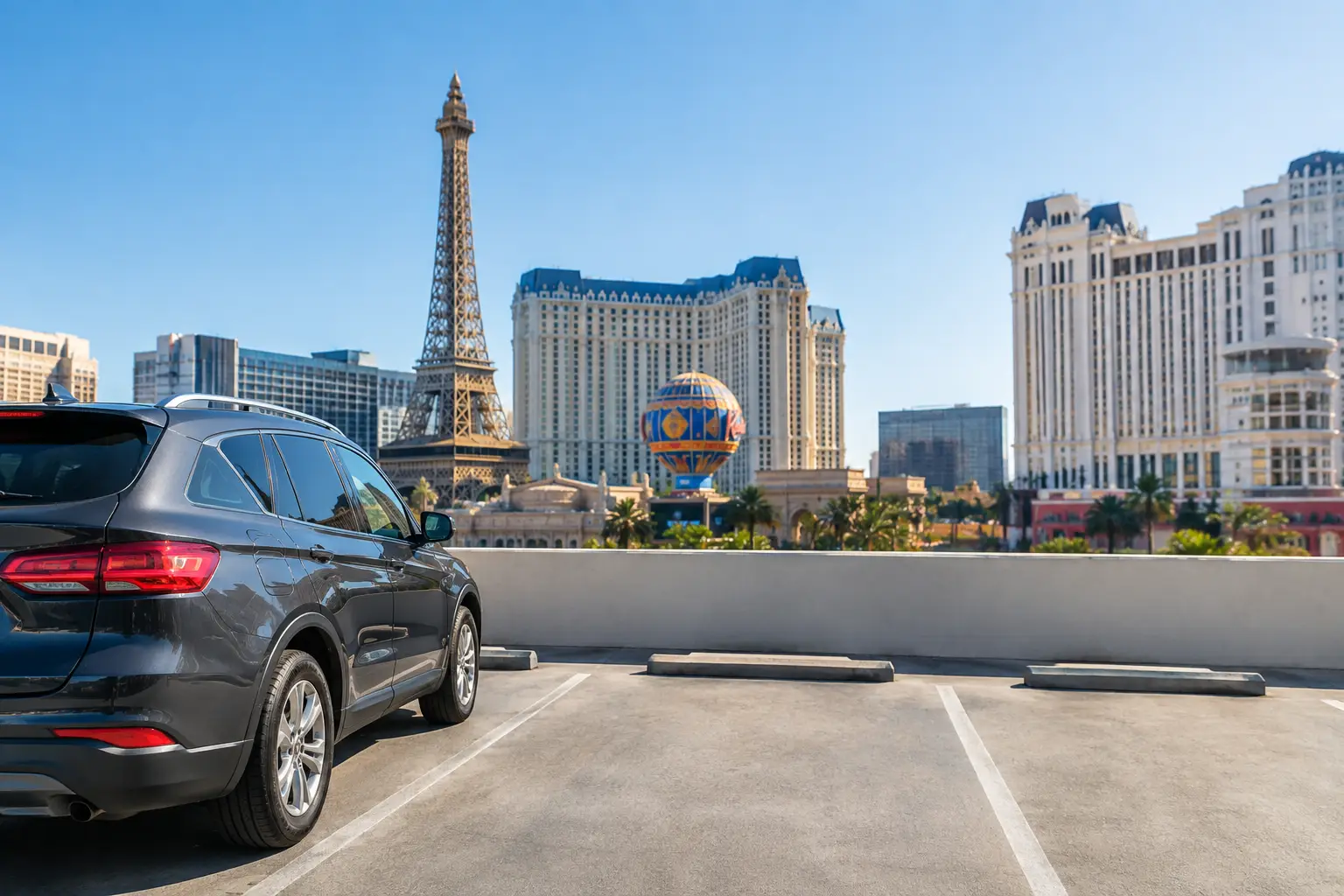
A low hotel rate can stop looking like a deal the moment you add Vegas parking, resort fees, and a car that sits in a garage most of the trip. The right move depends less on finding the cheapest space and more on deciding whether a rental car actually improves your itinerary. On the Strip, convenience has a price. Downtown, the math can work differently. And if you plan to drink, see shows, or spend every night in a different casino, driving may create more hassle than freedom.
Vegas parking starts with your hotel choice
If you are staying on the Strip, check your resort's current self-parking and valet policy before booking the room, not when you pull into the garage. Fees, guest benefits, and validation rules change often, particularly around major conventions, fight weekends, holidays, and Formula 1-related road closures. The booking rate is only one part of the real nightly cost.
Location matters just as much as the fee. A garage connected to your hotel is useful when you plan a day trip to Red Rock Canyon, Hoover Dam, or a grocery run. It is less useful if your schedule is built around pool time, a show, dinner nearby, and casino hopping on foot. The Strip looks compact on a map, but resort properties are huge. Leaving one garage, driving a few blocks, and walking through another resort can take longer than simply walking or taking a rideshare.
For a first trip, a central Strip hotel gives a car its best chance of becoming optional. Staying around Bellagio, Cosmopolitan, Paris Las Vegas, Caesars Palace, or Park MGM puts a large share of restaurants, attractions, and show venues within walking range. North Strip and south Strip stays can still work well, but you should expect more rideshare trips or longer walks. Do not choose a hotel far from your priorities just because its parking looks cheaper.
Self-parking versus valet
Self-parking is usually the value choice if you will use the car repeatedly and do not mind the walk from the garage to the hotel tower. At larger resorts, that walk can be substantial, especially after a flight or late at night. Save the garage level, elevator bank, and hotel tower in your phone. It sounds minor until you return tired from dinner and discover that the garage is a maze.
Valet makes the most sense for short stays, heavy luggage, mobility needs, upscale dinner reservations, or a schedule that includes several drive-out day trips. It is not just a luxury add-on. At some sprawling resorts, it can save meaningful time. But valet also means waiting for your car, tipping each time, and dealing with event traffic at the busiest arrival windows. If you only plan to use the vehicle once, the convenience premium may not be worth it.
What to expect from Strip parking garages
Most major Strip garages are designed for hotel guests, casino visitors, restaurant diners, and event crowds at the same time. That means the smoothest arrivals are generally earlier in the day and later at night after major shows let out. Friday afternoon through Sunday can be especially slow near popular resorts, and convention traffic can affect weekday patterns.
Do not assume a restaurant reservation means free or reduced parking. Some venues may offer validation, but policies can be limited by time, spend level, garage, or event date. Ask the restaurant directly before relying on it, then confirm the terms at the garage entrance. A validation that covers a short meal does not help much if you decide to stay for drinks, gambling, or a second stop.
Casino parking is also a poor substitute for a citywide parking plan. You may find an easy space at one property, then face a long walk to where you actually want to be. Crossing the Strip is not always simple, either. Pedestrian bridges, blocked medians, construction, and resort entrances can turn a seemingly short crossing into a 15-minute detour.
Downtown Vegas parking is often simpler
Downtown and Fremont Street usually make more sense for travelers who want to park once and explore on foot. The core area is far more compact than the Strip, with garages, surface lots, hotel parking, and street spaces clustered around Fremont Street Experience and nearby casinos. Rates can vary sharply by day, special event, and proximity to the action, but the walking payoff is real.
If you are staying Downtown, choose parking connected to or very close to your hotel when possible. The area is walkable, but it is still Las Vegas: summer heat, luggage, late-night crowds, and a few blocks of distance can change the experience. This is particularly true for families and travelers arriving after dark.
Downtown is also a practical base if you want a car for day trips but do not need to drive constantly within the tourist zone. You can leave for Valley of Fire or Red Rock in the morning, return in the afternoon, and spend the evening on Fremont without moving the car again. That is a much better use of a rental than paying to garage-hop along the Strip.
When renting a car is worth it
A rental is worth considering when your trip includes destinations beyond the resort corridor. Red Rock Canyon, Valley of Fire, Hoover Dam, Lake Mead, the Nevada side of the Grand Canyon, and suburban restaurants are all easier by car. It can also work well for families who need car seats, travelers splitting costs across four people, or repeat visitors staying off the Strip.
For a classic two- or three-night Strip weekend, the calculation often goes the other direction. Add the rental rate, insurance, fuel, hotel parking, valet tips, and possible overnight parking at an attraction, and a car can cost more than a handful of rideshares. More importantly, it can tempt you to drive after drinking. Las Vegas has no shortage of transportation options, and this is not the place to gamble on whether you are okay to drive.
If you do rent, pick it up after arrival rather than automatically at the airport if your first day is Strip-only. You avoid paying for a car that will sit in a garage while you adjust to the city. Conversely, return it before your final night if your remaining plans are all shows, dinners, and nightlife near the hotel.
Where the savings actually are
The biggest Vegas parking savings usually come from reducing how often you move the car. Pick one garage for the day, build your plans around that neighborhood, and walk or use rideshare for the rest. Parking at every meal, attraction, and casino turns small charges and lost time into a real trip expense.
Before leaving your hotel, check the garage's posted daily rate, re-entry rules, height limits if you have an oversized vehicle, and whether an event is scheduled nearby. Screenshot your reservation and parking confirmation if one is provided. Keep valuables out of sight, even for a short stop, and do not leave luggage in the vehicle while you explore.
For nightlife-heavy trips, make the decision early: park the car for the night and use rideshare, taxis, or public transit. Trying to retrieve a vehicle from a packed garage at closing time is a bad ending to an otherwise well-planned night.
The best parking plan is often boring: choose a hotel that fits your itinerary, park once, and spend your time where you came to be rather than circling a garage looking for a slightly better deal.