
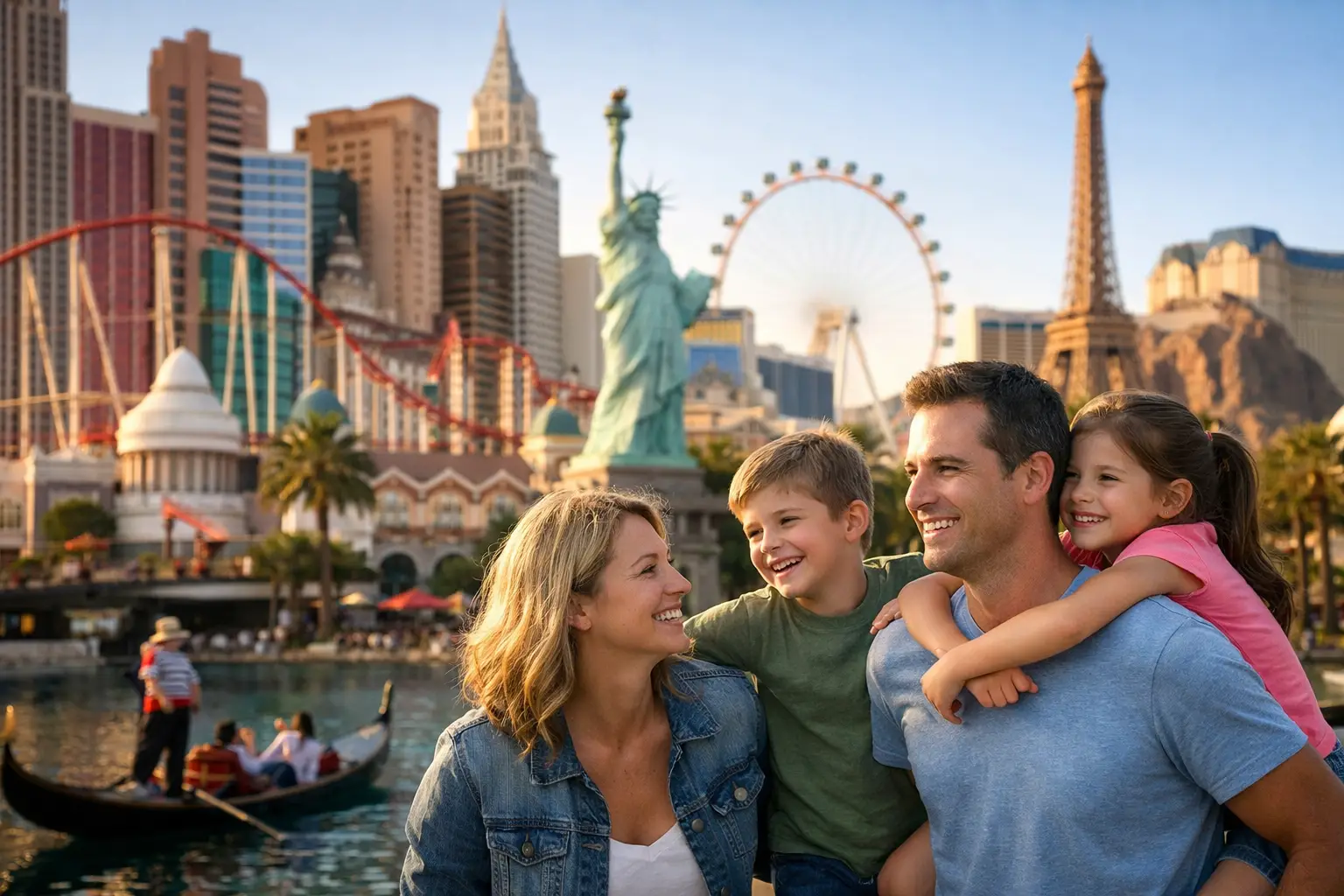
Las Vegas works for families when you stop treating the Strip like a theme park and start treating it like a very large resort corridor with a few excellent kid-friendly stops. The best family friendly Las Vegas attractions are not necessarily the flashiest ones. They are the ones that fit your hotel location, your children’s ages, the desert heat, and the amount of walking your group can realistically handle.
A common mistake is booking attractions at opposite ends of the Strip on the same day. That turns a fun outing into a long, expensive series of rideshares and tired-kid negotiations. Build each day around one paid anchor, then add nearby free sights or an easy pool break.
Family Friendly Las Vegas Attractions by Area
Central Strip: Bellagio Fountains and Conservatory
The Bellagio Fountains remain the best free family stop in Las Vegas. Kids get the spectacle, adults get an iconic Vegas moment, and nobody needs a ticket. View them from the public sidewalk in front of Bellagio or from the pedestrian bridge nearby. Arrive a little early if you want a rail spot, especially after dinner.
Inside Bellagio, the Conservatory & Botanical Gardens is another free win. Its seasonal displays give families a cool, stroller-friendly break from the Strip, and the visit is short enough that it will not test a child’s patience. The trade-off is crowding. Go in the morning or during the afternoon heat rather than trying to squeeze it in after an evening fountain show.
This pair works particularly well for families staying at Bellagio, Paris Las Vegas, Cosmopolitan, Vdara, Aria, or Planet Hollywood. From farther north or south, it may not be worth a special trip unless you are already planning a central Strip dinner or show.
The LINQ Promenade: High Roller and FlyOver
The High Roller observation wheel is one of the more reliable paid attractions for mixed-age groups. The cabins are enclosed, air-conditioned, and spacious enough that small children are not trapped in a cramped viewing deck. The ride moves slowly, which is a plus for guests uneasy with heights but can feel too mild for teens seeking thrills.
Daytime tickets typically offer better value, while evening delivers the stronger skyline view. For families, the sweet spot is often late afternoon: you avoid the hottest part of the day and can watch the lights come on without paying peak nighttime pricing.
Nearby, FlyOver Las Vegas is a motion-based flying ride with large-format visuals and effects. It is a smarter pick for school-age kids and teens than for toddlers, who may be intimidated by the movement or not meet height requirements. Check the current show options and restrictions before committing, then pair it with the High Roller only if your budget supports two paid attractions in the same area.
North Strip: The STRAT Observation Deck
The STRAT observation deck gives families a high-altitude Vegas view without requiring a full thrill-ride commitment. The indoor and outdoor viewing areas are the draw. The rides at the top are a separate question entirely: they are built for older teens and adults who actively want an intense experience, not for families looking for a gentle sightseeing stop.
The location is the complication. The STRAT sits north of the main resort core, so it is most convenient for guests staying there, at Sahara Las Vegas, Fontainebleau, Resorts World, or nearby. From Bellagio or Mandalay Bay, take a rideshare rather than walking in summer heat or late at night.
Mandalay Bay: Shark Reef Aquarium
Shark Reef Aquarium is one of the strongest indoor options for younger children, especially when temperatures make outdoor sightseeing unpleasant. It is compact, polished, and easy to complete in roughly an hour, which makes it a practical addition rather than an all-day commitment. The tunnel, sharks, rays, and reptiles hold attention better than a conventional aquarium visit.
Its limitation is value. Admission can feel expensive for the amount of time inside, especially for larger families. It makes the most sense if you are staying at Mandalay Bay, Delano, Luxor, or Excalibur, or if you are already headed south for another reason. Do not cross the entire Strip solely for Shark Reef unless your children are particularly enthusiastic about marine life.
Circus Circus: Adventuredome
Adventuredome is Vegas’ weather-proof amusement park, located inside Circus Circus. It has rides and games for a broad age range, from small-kid attractions to roller coasters that appeal to older children and teens. For a family visiting during extreme heat, cold weather, or a rare rainy day, that indoor setup changes the equation.
The practical question is whether your children will use enough rides to justify an unlimited-ride wristband. Families with younger kids may be better off buying individual rides or limiting the visit to a few hours. Families with thrill-seeking tweens and teens can get more value from a wristband, particularly if they arrive early before lines build.
Circus Circus is not a luxury-resort experience, and parents should set expectations accordingly. Go for the indoor rides, not for a polished Strip atmosphere.
Downtown: Discovery Children’s Museum and Fremont Street
The Discovery Children’s Museum is one of the best choices for families with children roughly preschool age through early elementary school. It is hands-on, air-conditioned, and far more suited to active play than most Strip attractions. Because it is near Downtown rather than the Strip, plan it as a dedicated half-day outing instead of trying to combine it with Bellagio or Mandalay Bay.
Fremont Street Experience is nearby, but it requires judgment. The canopy light show is visually impressive, and an early evening walk can work for families with older kids. Later at night, Downtown becomes louder, busier, and more adult-oriented. Treat Fremont as a brief stop before dinner, not a late-night family destination.
Off the Strip: Springs Preserve and Red Rock Canyon
Springs Preserve is the quiet alternative when the Strip has started to feel like too much. Its museums, gardens, trails, and Nevada-focused exhibits give kids room to move and give adults a break from casino corridors. It is best for families with a rental car or those willing to use rideshare, because it is not convenient to reach on foot from major resorts.
Red Rock Canyon is the better choice for families who want a real outdoor contrast to Las Vegas. The scenic drive delivers big payoff without requiring a strenuous hike, while shorter trails can work in cooler months. Do not underestimate desert conditions. In late spring through early fall, go very early, carry more water than you think you need, and avoid turning a midday hike into the day’s main event.
Two Attractions for Older Kids and Teens
AREA15 is often a better fit for tweens, teens, and adults than for very young children. The complex includes immersive art, games, and ticketed experiences, with Omega Mart usually the headline choice. It is creative and memorable, but costs can climb quickly once a family starts adding separate activities. Pick one main experience, reserve ahead for popular time slots, and resist treating every attraction inside as mandatory.
The Pinball Hall of Fame is the value counterweight. It is casual, low-pressure, and filled with playable machines that appeal across generations. You pay as you play, making it easier to control spending than a fixed-price attraction. Its south-Strip location means it pairs well with Mandalay Bay, the Welcome to Las Vegas sign, or a rental-car day rather than a central Strip itinerary.
How to Build a Family Day That Actually Works
Start with one ticketed attraction per day. Add a nearby free stop, a meal, and a return to the hotel before the evening if your children are young. Las Vegas hotels are destinations in themselves, and an afternoon pool break can be more valuable than a third attraction.
Use the monorail selectively. It is useful for reaching east-side properties and the LINQ area, but it does not serve every major resort entrance and can still leave you with long walks. For a family of four or more, a short rideshare may be the better value when everyone is tired. If you have a car, save it for Springs Preserve, Red Rock Canyon, and other off-Strip plans, not for hopping between Strip resorts where parking fees and traffic can eat into the day.
Also pay attention to age restrictions, height requirements, and show times before you promise anything to a child. Las Vegas changes operating hours, seasonal schedules, and ticket pricing often. A five-minute check before leaving the hotel can prevent the most avoidable disappointment of the trip.
The smartest family itinerary leaves room for the unexpected: a longer pool session, a child who needs air-conditioning now, or a fountain show that turns out to be the day’s favorite memory. In Las Vegas, the plan works best when it gives your family permission not to do everything.